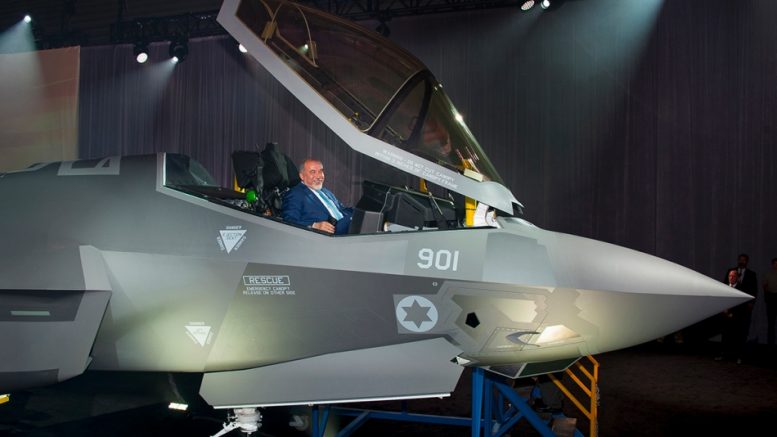
In late 2024, Elon Musk publicly dismissed the F-35 Joint Strike Fighter as an outdated and overpriced weapon. On X, he claimed that the $100 million aircraft was “obsolete” and that drones would soon replace manned jets entirely. But recent events have challenged that view.
In June 2025, amid Israel’s military campaign against Iran, the F-35I Adir—Israel’s customized version of the American-made stealth fighter—has demonstrated its full potential. These jets carried out deep, long-range strikes against hardened Iranian targets, including air defense systems, missile launchers, and nuclear sites. According to Israeli defense officials, the missions were completed without losses, and the aircraft faced little resistance.
The Israeli Air Force credited the F-35s with neutralizing critical air defenses and establishing air superiority—something drones, even armed ones, have yet to achieve under similarly intense conditions.
Manned Jets Still Matter
Defense experts told Newsweek that these operations underscore why manned stealth aircraft remain essential. Retired Lt. Gen. David Deptula, now at the Mitchell Institute for Aerospace Studies, said the F-35’s ability to fly nearly 1,000 miles undetected and strike heavily defended targets shows why it’s still vital to modern warfare.
“These are complex missions that drones cannot yet execute,” Deptula said. He emphasized the flexibility, situational awareness, and real-time decision-making that only human pilots in advanced jets can deliver.
Justin Bronk, an airpower specialist at the Royal United Services Institute, added that while drones are powerful tools for surveillance and saturation strikes, they lack the resilience and adaptability needed for high-risk, layered missions in contested airspace.
The Human Advantage
The F-35’s impact in Iran was not just about stealth. The jets were equipped with extended fuel tanks and precision-guided bombs. They hit hardened targets like the Natanz and Fordow nuclear facilities—without aerial refueling and with minimal radar detection.
Former Navy fighter pilot and Pentagon strategist Guy Snodgrass said the F-35’s advanced sensors and pilot expertise make it the most capable option available today. “In the current threat landscape, manned stealth fighters remain unmatched,” he said.
Drones Are the Future—But Not Yet
That’s not to say drones have no place. Israel reportedly used smaller drones to suppress enemy air defenses and support F-35 strikes. Deptula called this a “smart, effects-based approach”—using the right tool for each mission.
Just before Israel’s campaign, Ukraine demonstrated the power of unmanned warfare in “Operation Spiderweb,” a coordinated drone and missile attack deep into Russian territory. The operation showed how drones can strike far behind enemy lines with less risk to expensive assets.
Still, experts agree drones haven’t yet reached the level of precision, durability, and adaptability required for complex missions. “One day, unmanned aircraft may dominate the skies,” said Snodgrass, “but today, the F-35 is the benchmark.”
Lockheed Martin, the F-35’s manufacturer, echoed that sentiment. In a statement, a spokesperson said the jet’s ability to gather and share intelligence across all domains—land, sea, air, space, and cyber—gives it a decisive edge over any current alternative.
For now, the skies over Iran serve as a powerful reminder: the age of manned fighters isn’t over just yet.

