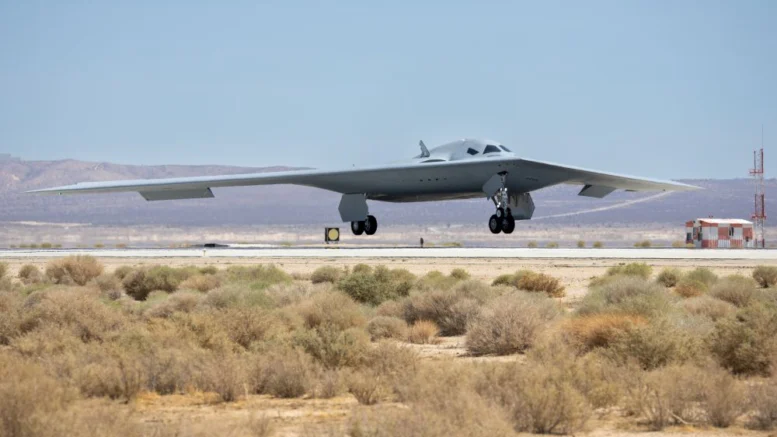
Aviation News – Northrop Grumman and the U.S. Air Force have successfully demonstrated the first weapons release capability for the B-21 Raider stealth bomber, marking a critical milestone toward operational combat readiness.
Developed by Northrop Grumman for the U.S. Air Force, the sixth-generation long-range strategic bomber has advanced rapidly through its flight-test phase at Edwards Air Force Base in California. Thousands of hours of virtual modeling within a digital twin environment allowed the B-21 Combined Test Force to streamline weapons integration and predict precise trajectories before physical flight.
The program is currently accelerating both manufacturing and testing phases ahead of the aircraft’s scheduled arrival at Ellsworth Air Force Base in South Dakota by 2027. This sustained rapid pace highlights the strong collaboration between defense partners and demonstrates the exceptional maturity of the aircraft’s open systems architecture.
The successful conventional munition drop proves the B-21 Raider can effectively carry and employ combat power, validating its ability to hold any global target at risk. Its flexible open-architecture design enables swift integration of new weapons and multi-mission capabilities, ensuring the fleet maintains superior survivability in highly contested environments.
“B-21 is another step closer to giving the U.S. unrivaled deterrence,” said Tom Jones, corporate vice president and president of Northrop Grumman Aeronautics Systems. “As we’ve heard from our Air Force partners, the B-21 Combined Test Force is the envy of the entire test community for its sustained rapid test pace and progress. Northrop Grumman is turning advanced technology into real capability and delivering with both performance and speed.”
As manufacturing scales up with expanded facilities in California and Utah, defense leaders urge continued focus on maintaining this development velocity to secure the nation’s future strategic deterrence framework. Stakeholders and defense analysts should monitor upcoming flight milestones and infrastructure preparations as the program approaches its inaugural operational base deployment.


