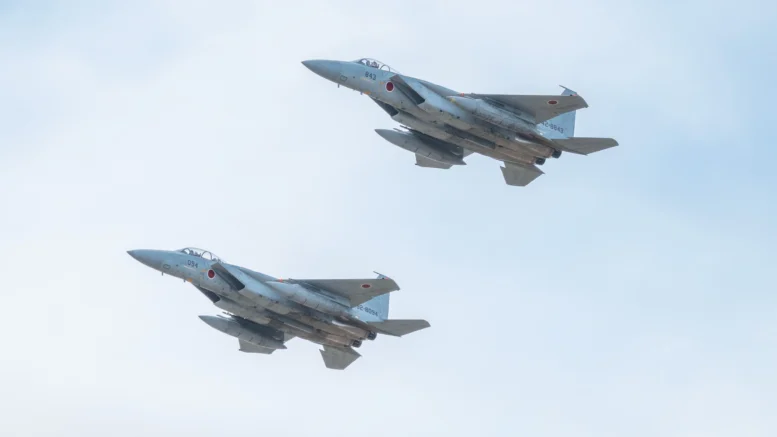
Aviation News – Japan’s Joint Staff scrambled Japan Air Self-Defense Force fighter jets every day from September 3 to September 7, 2026, after detecting a Chinese Y-9 intelligence-gathering aircraft over the East China Sea. The repeated intercepts underscore heightened military readiness and growing regional tensions over contentious maritime airspace near Japan.
The Joint Staff issued its most recent flight track update on September 7, 2026, tracking a single Y-9 intelligence platform as it approached from the Chinese mainland. The aircraft flew to a position south of the Danjo Islands in Nagasaki Prefecture, turned southwest, and reversed course off Okinawa Island before heading northeast. After altering direction again south of the Danjo Islands, the plane returned toward mainland China, prompting emergency scrambles by Western Air Defense Force fighters and supporting units.
The persistent five-day streak highlights an intensifying pattern of reconnaissance operations by the People’s Liberation Army. Military authorities in Japan closely monitor these flight routes to safeguard national sovereignty and prevent potential airspace violations. The flight maneuvers near Nagasaki Prefecture and Okinawa highlight the strategic importance of the East China Sea corridor for both nations.
The Y-9 intelligence-gathering aircraft functions as a specialized airborne platform designed to monitor electromagnetic emissions and collect critical electronic intelligence. Equipped with advanced sensors, radar arrays, and communication intercept tools, the turboprop aircraft gathers real-time data on air defense systems and naval movements. Standard operational protocol dictates that JASDF fighters launch immediately upon radar detection to maintain continuous visual track and signal a deterrent presence.
“Fighters of the Western Air Defense Force responded, as did other units,” confirmed Japan’s Joint Staff in an official operational summary detailing the daily defense posture and unit deployments.
The sustained surge in reconnaissance sorties signals ongoing strategic surveillance by Chinese military forces across key island chains. Neighboring defense ministries are expected to maintain heightened airborne surveillance and enhance joint domain awareness to manage potential escalation. Defense observers urge continuous monitoring and diplomatic communication channels to preserve regional stability.
This five-day series of intercepts demonstrates the demanding operational tempo placed on the Japan Air Self-Defense Force. By maintaining rapid-response intercepts, Japan reaffirms its commitment to airspace integrity and regional security monitoring. Moving forward, persistent surveillance flights over the East China Sea will likely prompt continued vigilance and coordinated military responses.