Aviation News – US Navy Advances E-130J Phoenix II Deployment for Strategic Command
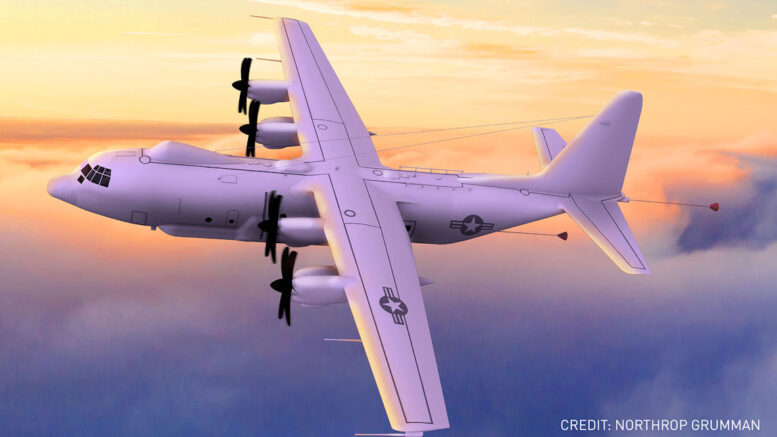
The US Navy is advancing plans to deploy the E-130J Phoenix II, a next-generation platform designed to replace the aging E-6B Mercury fleet in executing the vital Take Charge and Move Out (TACAMO) mission. The new aircraft secures an uninterrupted Nuclear Command, Control and Communications (NC3) link between national leadership and deployed strategic forces.
Defense giant Northrop Grumman serves as the prime contractor leading the overhaul, overseeing the integration of advanced TACAMO mission architectures. The program adapts the proven Lockheed Martin C-130J-30 airframe to host critical communication systems. The initiative marks a major milestone in updating the military’s airborne strategic deterrence infrastructure.
Under the engineering architecture, Collins Aerospace provides specialized Very Low Frequency (VLF) communications equipment vital for deep-water transmission. Lockheed Martin works alongside as a directed subcontractor managing airframe integration and airworthiness, ensuring seamless conversion from standard military transport to the E-130J configuration.
The primary operational purpose of the E-130J Phoenix II lies in its ability to transmit encrypted nuclear command authorization directly to submerged submarine forces under hostile electronic warfare conditions. The C-130J-30 airframe delivers higher operational availability, lower lifecycle maintenance costs, and robust runway adaptability compared to legacy jet platforms.
”The E-130J Phoenix II ensures our strategic deterrence remains resilient and responsive, maintaining an unbroken link between command authorities and naval forces,” stated defense program representatives highlighting the transition.
Replacing the E-6B Mercury ensures the US Navy retains rapid-response operational capability into future decades as threat environments evolve. This transformation guarantees that airborne command posts remain survivable, flexible, and capable of maintaining global maritime connectivity. The multi-company partnership reflects a streamlined acquisition strategy to modernize defense infrastructure efficiently.