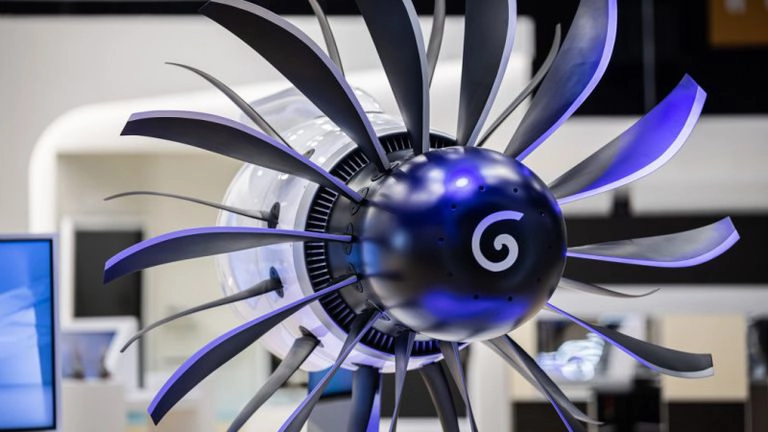
Aviation News – Safran has officially launched the TAKE OFF project, a major European initiative backed by the Clean Aviation partnership to pioneer the first flight of a cutting-edge Open Fan engine. This collaborative effort aims to revolutionize commercial aviation by significantly boosting energy efficiency and reducing the industry’s environmental footprint.
The project, titled Technology and Knowledge for European Open Fan Flight, is supported by a €100 million investment from the European Union’s public-private Clean Aviation program. Coordinated by Safran Aircraft Engines, the consortium unites 25 strategic partners, including industry leaders such as Airbus, Avio Aero, and GKN Aerospace, alongside various academic institutions and research centers.
This initiative is designed to prepare for a comprehensive flight demonstration of an Open Fan engine architecture by the end of the decade. By implementing this disruptive engine design, the consortium anticipates a 20% improvement in energy efficiency compared to current-generation engines. The work will span all critical development stages, from assembling the demonstrator to integrating it onto an Airbus A380 and conducting an in-depth analysis of the test flights.
The Open Fan architecture achieves its efficiency by removing the traditional engine nacelle, allowing for larger fan blades that move a greater volume of air at lower speeds. This design represents a major technical leap in propulsion efficiency and is essential for the future of decarbonizing short- and medium-range aircraft. The upcoming flight tests, scheduled for 2029, will be pivotal in validating the technological maturity of this propulsion system before it is readied for commercial service in the mid-2030s.
“TAKE OFF embodies the collective ambition of the European Union and the aerospace industry to achieve more sustainable aviation,” stated Pierre Cottenceau, Technical Director and Head of R&T at Safran Aircraft Engines. This collaboration marks a critical milestone in proving that high-efficiency propulsion can be successfully scaled and integrated into future commercial aircraft platforms.
Looking ahead, the success of the TAKE OFF program is expected to pave the way for a new generation of aircraft entering service by the mid-2030s. As the aerospace sector continues to navigate rigorous sustainability targets, this partnership remains a vital blueprint for how public and private entities can accelerate the development of breakthrough climate-friendly technologies.
The launch of this project represents a significant stride toward a greener future for commercial aviation. With flight tests targeted for 2029, the industry remains focused on delivering high-efficiency solutions that will define the next decade of air travel.