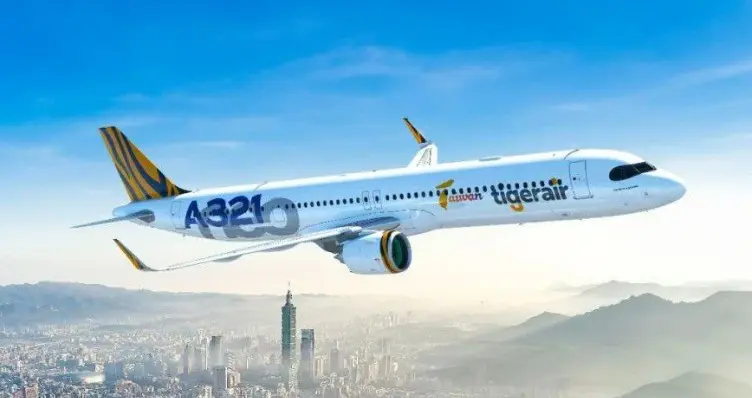
AviationNews – Tigerair Taiwan has solidified its growth strategy by signing a binding purchase agreement for four additional Airbus A321neo aircraft during the Singapore Airshow 2026. This move marks a significant milestone for the carrier as it seeks to bolster its regional network and drastically reduce its environmental footprint through advanced aviation technology.
The agreement, finalized on February 4, 2026, represents the airline’s first direct purchase from the manufacturer for this specific model. As a subsidiary of the China Airlines Group, Tigerair Taiwan is currently in the midst of a “third-generation” fleet expansion aimed at replacing older narrowbody models. The carrier currently manages a fleet of 17 A320-family aircraft, and this new addition is designed to provide greater commonality, thereby streamlining maintenance and pilot training across its entire operation.
Technically, the A321neo serves as a powerhouse for low-cost carriers due to its 232-seat high-density configuration, which allows for a lower cost-per-seat on high-demand “golden routes” across Asia. Equipped with the latest generation engines and Sharklet wingtip devices, the aircraft delivers a 20% reduction in fuel consumption and carbon emissions compared to previous-generation jets. This increased efficiency enables the airline to overcome slot constraints at busy airports like Taipei Taoyuan by carrying more passengers per flight movement.
“The purchase of A321neo aircraft is a cornerstone of our fleet expansion, designed to maximize operational efficiency as we scale for regional dominance,” stated Joyce Huang, Chairperson of Tigerair Taiwan. “By serving more passengers across more destinations with a lower cost per seat, this investment reinforces our position as Taiwan’s leading low-cost carrier while meeting our ESG targets.”
Looking ahead, this order is a vital step toward Tigerair Taiwan’s goal of expanding its next-generation fleet to 30 aircraft by 2033. As the airline prepares to launch new routes, such as the upcoming service to Okinawa, the A321neo will provide the range and capacity needed to capture emerging market demand. Industry observers expect this move to trigger further competitive responses from other regional budget players as the market for fuel-efficient, high-capacity narrowbodies continues to heat up.
By integrating the A321neo, Tigerair Taiwan is successfully balancing aggressive commercial growth with modern sustainability requirements. The transition to a larger, more efficient fleet ensures the airline remains a dominant force in the competitive Asian low-cost sector for the next decade.


