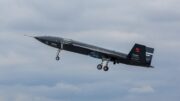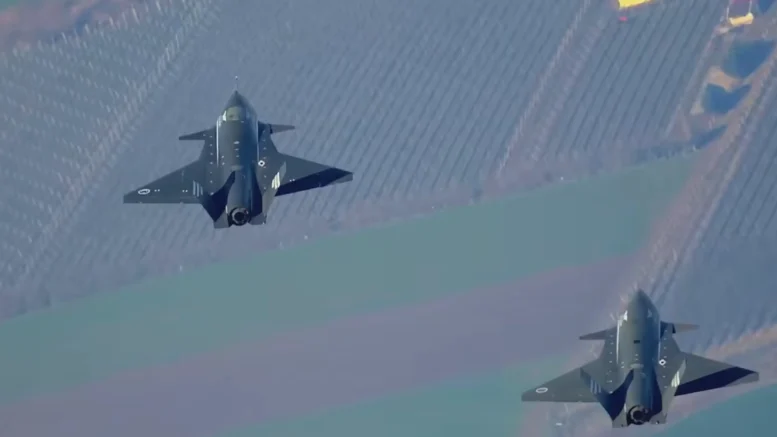
Aviation News – Baykar’s Bayraktar KIZILELMA unmanned fighter aircraft has completed a landmark test flight in Turkey, demonstrating autonomous close-formation flying between two unmanned combat aircraft for the first time in aviation history.
The test took place in Çorlu and involved KIZILELMA prototypes PT3 and PT5 operating together using smart fleet autonomy. Supported by advanced algorithms and an autonomous combat pilot system, the aircraft flew in coordinated formation without direct human control, marking a major milestone in the development of collaborative unmanned air combat capabilities.
Smart fleet autonomy allows multiple aircraft to share data, make coordinated decisions, and execute complex maneuvers as a single operational unit. In operational terms, this capability could enhance mission effectiveness, improve survivability, and reduce pilot workload by enabling unmanned fighters to operate as a coordinated team in contested airspace.
Baykar said the successful flight demonstrates the maturity of its autonomous systems, noting that the achievement “represents a critical step toward future air combat concepts where unmanned platforms operate together with high levels of independence and coordination.”
Looking ahead, the company plans to further expand autonomous capabilities, including more complex cooperative missions and integration with manned and unmanned assets. Such developments are expected to shape next-generation air power concepts and influence how future air forces plan and conduct operations.
The successful KIZILELMA test underlines Baykar’s growing role in advanced unmanned aviation and highlights a shift toward autonomous, networked combat aircraft. As testing continues, smart fleet autonomy is likely to become a defining feature of future military aviation.