AviationNews –
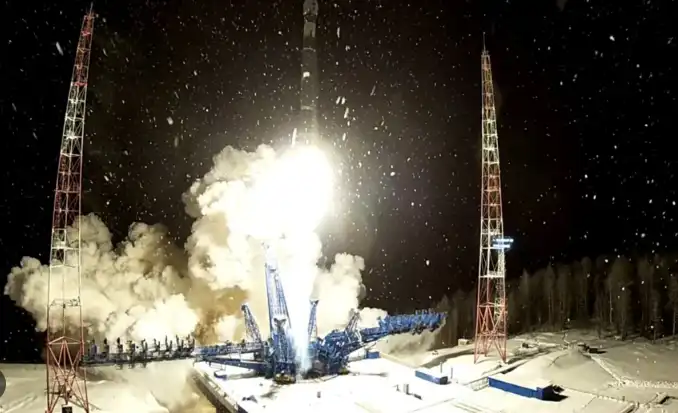
NATO intelligence agencies have identified a high-risk Russian project aimed at developing a kinetic anti-satellite weapon designed specifically to neutralize large-scale networks like Starlink. The emergence of this “zone-effect” system marks a significant escalation in space warfare, threatening to disrupt critical communications by saturating orbital paths with thousands of high-velocity projectiles.
Background on the Orbital Threat
Evidence of this development surfaced in late 2025, with intelligence findings from two NATO member states indicating that Russia is prioritizing a counter-measure to Western space superiority. This move is largely seen as a direct response to the pivotal role SpaceX technology has played in providing resilient internet services to Ukraine during the ongoing conflict. Unlike previous missile tests that targeted single objects, this new program focuses on a “shotgun” approach to disable multiple satellites within a specific orbital plane simultaneously.
Technical Impact and the Kessler Effect
The proposed weapon functions by releasing hundreds of thousands of tiny high-density pellets into low Earth orbit. These fragments, often only millimeters in size, would be nearly impossible to track from the ground but possess enough kinetic energy to pierce solar panels and internal electronics. The primary fear among experts is the potential for the Kessler effect, a catastrophic chain reaction where collisions between satellites and shrapnel create a self-sustaining cloud of debris. Such a scenario could render vital orbital altitudes entirely unusable for generations, impacting global GPS, weather monitoring, and telecommunications.
Expert Perspective
“Russia has, in recent years, been multiplying irresponsible, dangerous, and even hostile actions in space,” stated a representative from the French Space Command regarding the development. “The deployment of such a system would not only target specific adversaries but would endanger the orbital assets of every nation, including those of Russian allies.”
The Future of Space Warfare
The potential deployment of a “zone-effect” weapon signals a shift from precision strikes to area-denial tactics in space. If Russia moves forward with this technology, it could force a radical redesign of satellite constellations and prompt stricter international regulations regarding orbital debris. For now, the global community remains on high alert, as the weapon represents a “lose-lose” scenario where the destruction of an enemy’s network could inadvertently destroy one’s own space infrastructure.
Conclusion
The discovery of this project underscores the growing vulnerability of commercial mega-constellations to state-sponsored kinetic attacks. While the system may currently be in the experimental phase, its existence highlights a precarious future for space security. Ensuring the long-term sustainability of the orbital environment will require unprecedented diplomatic cooperation to prevent a permanent debris crisis.