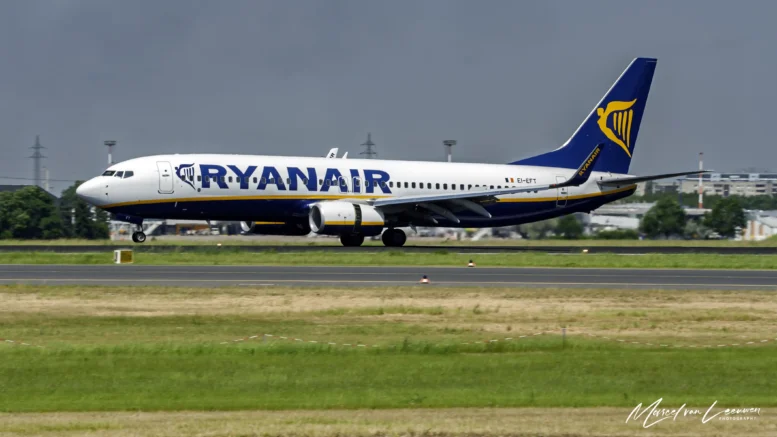
Aviation News – A Ryanair flight avoided disaster after making an emergency landing in Manchester, England, with only six minutes of fuel remaining, following three failed attempts to land at its intended destination due to severe weather. Authorities have launched an investigation into the serious incident, which occurred after the plane was diverted.
The incident came to light after the British newspaper The Guardian uncovered the story. The Boeing 737-800 aircraft, which can carry up to 189 passengers, departed from Pisa, Italy, on October 3 and was bound for Prestwick Airport near Glasgow, Scotland. Persistent bad weather prevented the plane from landing at Prestwick on three separate occasions, forcing the crew to divert to Manchester, where conditions were better.
Operational details from a technical logbook photograph revealed the severe fuel shortage. The remaining fuel reserve could sustain flight for a maximum of only six minutes, according to reports. This dangerously low level of fuel underscores the gravity of the situation, directly impacting the safety margin required for all commercial flights.
A pilot told The Guardian that the event came dangerously close to a fatal accident, highlighting the extreme risk involved. The standard procedure for a missed approach is to have sufficient fuel for a diversion and a safe landing, making the reported fuel level a critical safety concern.
A spokesperson for the airline confirmed the incident, stating, “Ryanair has reported this to the competent authorities. As this is currently the subject of an ongoing investigation which we are fully cooperating with, we cannot comment further.“
This near-miss immediately triggered an official investigation, which will focus on flight planning, adherence to fuel regulations, and the decision-making process of the flight crew and air traffic control. The outcome will likely influence future operational protocols for dealing with diversions and adverse weather conditions across the industry.
Ultimately, the flight safely reached Glasgow ten hours later than scheduled. This severe fuel depletion during a diversion sequence presents a significant challenge to the airline’s safety procedures, demanding a thorough review to ensure passenger safety remains the foremost priority on every flight.

