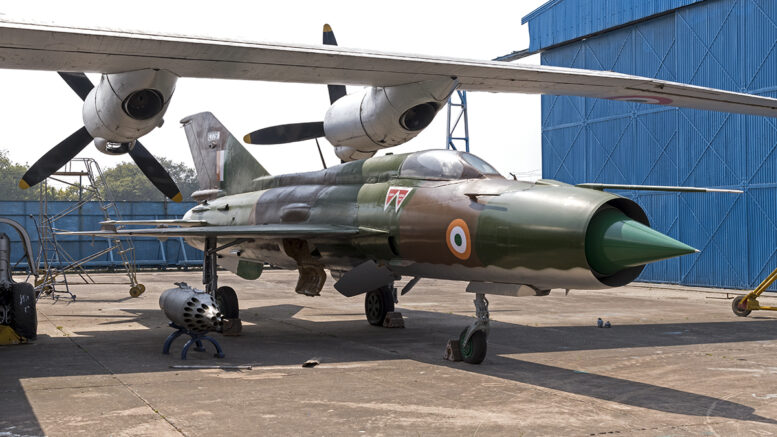
Aviation News – The Indian Air Force (IAF) has officially retired its MiG-21 Bison fighter jets after more than six decades in service, marking the end of an era for the force’s longest-serving aircraft.
The retirement ceremony took place on September 26, 2025, at Chandigarh Air Force Station, the same base where the IAF received its first six MiG-21s in 1963. Over its lifespan, the IAF inducted 872 aircraft, with Hindustan Aeronautics Limited (HAL) producing about 600 domestically. The MiG-21 became synonymous with the IAF, forming the backbone of its fleet and shaping India’s aerial defense capabilities for much of its history.
As the IAF’s first supersonic fighter, the MiG-21 played a pivotal role in transforming India’s air power. Its speed, agility, and versatility allowed it to remain operational for over six decades, supporting national defense during multiple conflicts and transitions. The aircraft’s longevity highlights its resilience, even as modern fighters gradually replaced it in recent decades.
“Today we bid farewell to an aircraft that has defined generations of air warriors,” an IAF spokesperson said. “The MiG-21 was more than just a machine; it was a symbol of our progress, our resilience, and our spirit to soar higher.”
Looking ahead, the IAF is focusing on modernizing its fleet with advanced fighters like the MiG-29, Su-30MKI, and indigenous Tejas jets. The retirement of the MiG-21 paves the way for new technologies that will enhance India’s operational readiness and align with evolving security needs.
The MiG-21 Bison’s departure marks the end of a chapter in Indian military aviation history. From its arrival in 1963 to its final flight in 2025, the aircraft served with distinction, leaving behind a legacy that will continue to inspire the nation’s future aviators.
Photo AviationMuseum