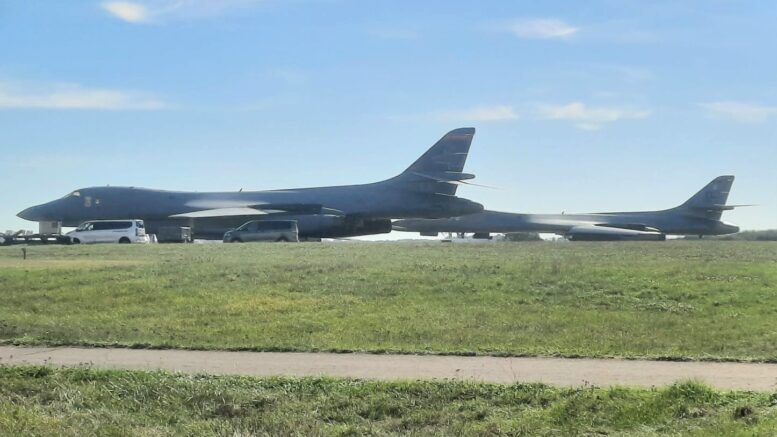
Aviation News – The United States Air Force has officially withdrawn its fleet of B-1 Lancer bombers from a major British air base following the arrest of five men suspected of planning terrorist activities nearby. British officials, including Prime Minister Andy Burnham, indicated that the foiled plot was likely backed by Iran, prompting swift operational shifts to ensure force protection.
The military aircraft had been deployed to RAF Fairford, located approximately 90 miles west of London. Serving as the preferred forward operating location for U.S. Strategic Command in Western Europe, the station recently played a central role in executing U.S. air strikes against Iranian-linked targets. However, security concerns escalated rapidly after counter-terrorism police detained five individuals in the immediate vicinity of the airfield on suspicion of preparing acts of terrorism.
According to a Pentagon official on Sunday, all deployment personnel and aircraft have completed their departure, returning safely to their home bases in the United States. The sudden relocation highlights the volatile security environment surrounding forward-deployed assets in Europe, particularly amid heightened geopolitical tensions between Washington and Tehran.
The B-1 Lancer serves as a cornerstone of long-range conventional deterrence, capable of delivering vast quantities of precision-guided munitions anywhere in the world on short notice. Maintaining operational security for these high-value assets requires dynamic force management, meaning command structures will rapidly redeploy aircraft when regional threat levels surge around foreign staging grounds.
”Force protection remains our highest priority during global deployments, and we continually evaluate regional security environments to ensure the safety of our aircrews and high-value strategic assets,” stated a senior defense spokesperson regarding military posture adjustments.
This withdrawal underscores the growing security challenges facing allied installations hosting strategic force posture assets across Europe. As international intelligence agencies continue to track hostile state-sponsored networks, future deployments will likely feature shorter rotational cycles and enhanced airfield security parameters to mitigate asymmetric threats.
The redeployment of strategic bombers from RAF Fairford demonstrates how dynamic security situations directly influence military operational planning. While the departure disrupts current rotational exercises, allied defense authorities remain focused on strengthening base perimeter defenses and intelligence sharing. As counter-terrorism investigations move forward in the United Kingdom, global military commanders will continue reassessing forward posture strategies to safeguard international security objectives.


