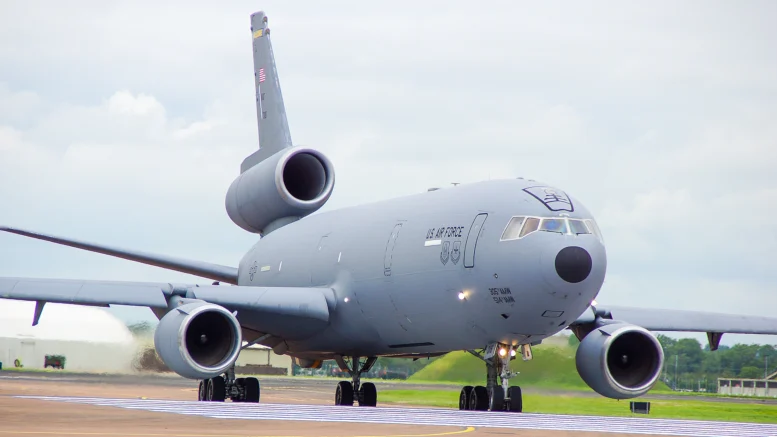
Aviation News – The first retired U.S. Air Force KC-10A Extender acquired by commercial contractor Omega Aerial Refueling Services departed Davis-Monthan Air Force Base on October 20, bound for San Antonio International Airport to begin a new operational life. This strategic transition marks a pivotal expansion in private aerial refueling capacity, shifting proven military assets directly into the commercial defense support sector.
Now officially carrying the civil aircraft registration N82247, the heavy trijet formerly operated under military serial number 86-0034 throughout a distinguished 35-year U.S. Air Force career. The aircraft was placed into storage in 2021 under the care of the 309th Aerospace Maintenance and Regeneration Group (AMARG), commonly known as the military boneyard in Arizona. Its reactivation highlights a growing trend of commercial operators acquiring heavy military platforms to meet increasing government contract demands.
The KC-10A Extender platform provides essential boom and probe-and-drogue refueling capabilities, allowing it to service a vast range of allied tactical fighters and transport aircraft. By integrating this heavy trijet into commercial operations, Omega Aerial Refueling Services significantly enhances its payload capacity and range, offering defense partners extended air-to-air refueling support without drawing upon active-duty military fleets.
“The addition of the KC-10 platform represents a milestone in our mission to provide versatile and dependable aerial refueling support to defense forces worldwide,” stated a representative from Omega Aerial Refueling Services.
As military operational demands continue to surge, the integration of surplus heavy refuelers like the KC-10A will play an increasingly critical role in maintaining global readiness. Defense contractors and military planners will closely monitor this deployment to determine how private operators can further alleviate operational strain on national air forces.