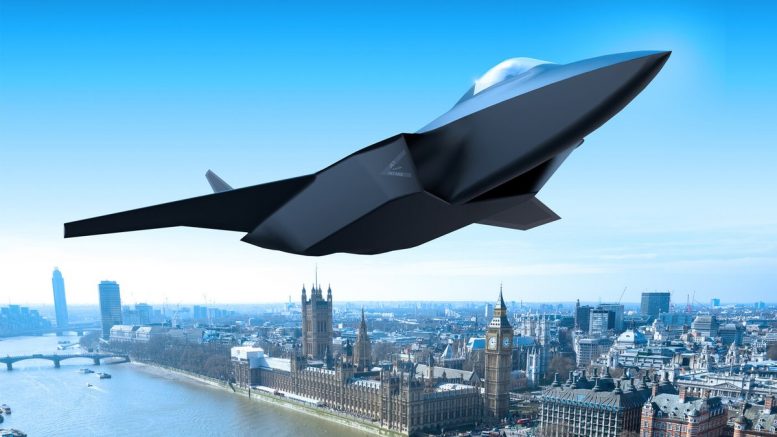
AviationNews – The British Ministry of Defence has committed £8.6 billion to the Global Combat Air Programme (GCAP), solidifying long-term funding for its next-generation stealth fighter jet. Announced as a central pillar of the newly unveiled Defence Investment Plan, this major financial guarantee provides critical operational and financial certainty to key defense contractors, including BAE Systems and Rolls-Royce.
The four-year funding pledge locks in the United Kingdom’s role alongside international partners Japan and Italy to develop a sixth-generation combat aircraft targeted to replace the Eurofighter Typhoon and Mitsubishi F-2 fleets. Formally launched through a trilateral alliance and supported by joint industrial entity Edgewing, GCAP represents one of Europe’s largest defense modernization efforts. The £8.6 billion allocation protects the crucial design and concept phase through the end of the decade, anchoring major manufacturing operations at facilities such as BAE Systems’ Warton site in Lancashire and safeguarding thousands of specialized engineering jobs across the domestic supply chain.
Technologically, GCAP introduces cutting-edge capabilities designed to redefine air superiority beyond 2035. The aircraft integrates advanced Artificial Intelligence (AI) sensor fusion, machine learning, and optional crewing, enabling it to operate with or without a pilot on board. Furthermore, the stealth platform is designed for seamless network integration with uncrewed “loyal wingman” drones and features revolutionary digital flight systems powered by advanced Rolls-Royce propulsion technologies.
“This record investment puts the security of the British public first, transforming our Armed Forces and giving them the funding and equipment they need to fight and defend our nation,” stated Prime Minister Keir Starmer during the presentation of the government’s spending framework.
Looking ahead, this multi-billion-pound commitment secures Britain’s sovereign combat air capability and reinforces its leadership position in global aerospace engineering. With a flying demonstrator scheduled to take to the skies in 2027, the initiative ensures that participating nations remain ahead of evolving geopolitical threats while driving long-term economic growth across high-tech defense sectors.
By guaranteeing £8.6 billion through the end of the decade, the UK government provides essential stability for the development of its sixth-generation combat fighter. This strategic backing ensures seamless collaboration with international partners ahead of the aircraft’s planned 2035 entry into service.


