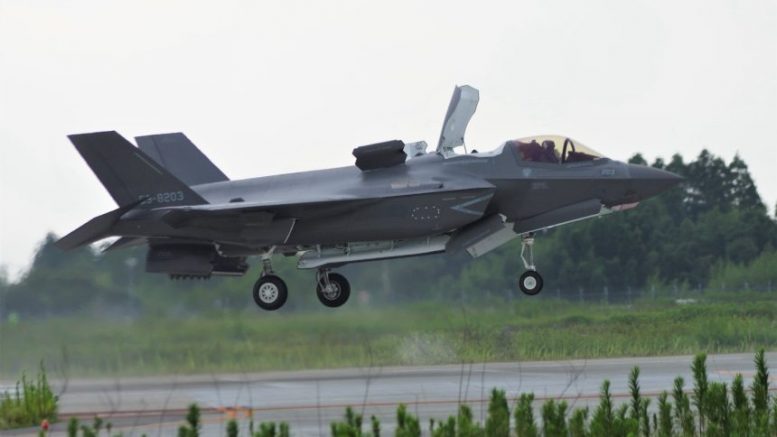
AviationNews – The air forces of Australia (RAAF), the United States (PACAF), and Japan (JASDF) have officially launched the inaugural Exercise Southern Cross 26 in the skies over Northern Australia. This milestone military drill focuses heavily on forward arming and refuelling (FARP) operations, enabling ground crews from the three allied nations to seamlessly arm and refuel each other’s F-35A Lightning II fighter jets.
Taking place primarily at RAAF Bases Darwin and Tindal in July 2026, the 10-day exercise brings together roughly 1,000 personnel and 40 aircraft. Marking a historic first, the drill advances the concept of true operational interchangeability among the participating forces. By moving past basic coordination, American, Australian, and Japanese technicians are actively substituting for one another on the tarmac, collectively handling the advanced stealth fighters without requiring a national hand-off.
At the core of the exercise is the execution of agile combat employment through joint FARP operations. In these scenarios, a combined multinational ground team connects refuelling lines and loads munitions onto an F-35A, regardless of which country owns the aircraft. This rapid replenishment capability ensures modern air forces can launch, execute missions, and immediately reload from shared platforms and equipment on the ground, minimizing turnaround times before adversaries can detect and respond.
“At the same time, Americans, Japanese and Australians are maintaining, rearming and refuelling each other’s aircraft,” stated Royal Australian Air Force Chief of Air Force Air Marshal Stephen Chappell. “That’s the level of interchangeability we’re already generating.”
The success of Exercise Southern Cross sets a robust foundation for future trilateral cooperation in the Indo-Pacific region. As geopolitical dynamics evolve, these synchronized combat logistics will be scaled up in upcoming multinational exercises, ensuring allied forces remain ready to defend collective interests rapidly and effectively.
In summary, this groundbreaking drill highlights a new era of military collaboration where Australia, the U.S., and Japan can treat their air assets as a unified fleet. By mastering joint operations, these nations solidify a flexible and resilient defence posture. Moving forward, this shared capability will act as a blueprint for maintaining regional security and stability.


