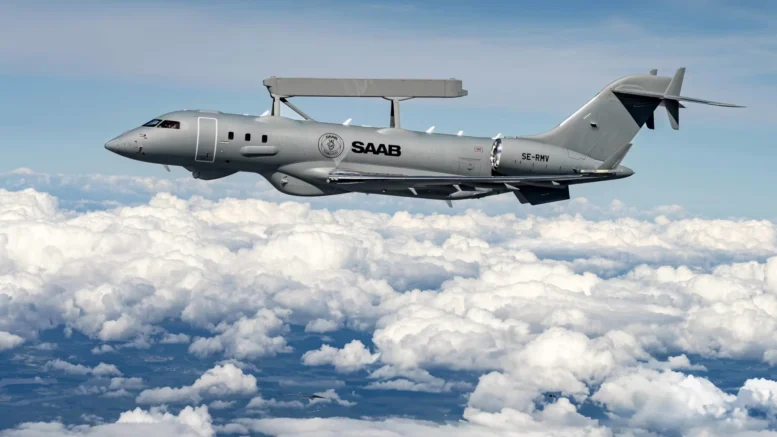
Aviation News – NATO is expected to announce plans next week to replace its ageing AWACS surveillance aircraft fleet with the GlobalEye airborne early warning and surveillance system developed by Sweden’s Saab. The decision is expected to be revealed during the alliance’s summit in Ankara, Türkiye, on July 7–8, marking a major step in modernising NATO’s airborne surveillance capabilities.
The planned selection follows years of discussions within NATO over replacing its ageing E-3A AWACS fleet, which has served as one of the alliance’s most important airborne command-and-control assets for decades. According to sources familiar with the matter, the announcement is expected to be made during the leaders’ meeting in Ankara, where defence and security cooperation will dominate the agenda.
The GlobalEye has emerged as the preferred successor thanks to its advanced surveillance capabilities and its ability to monitor air, land and maritime targets simultaneously. While NATO has not officially confirmed the decision and Saab has declined to comment, the reported selection represents a significant milestone for the Swedish aerospace company and for the alliance’s future defence strategy.
Unlike the older AWACS aircraft, the GlobalEye combines multiple sensors with a modern radar system capable of detecting threats over long distances. The platform provides real-time intelligence and situational awareness, allowing military commanders to coordinate operations more effectively while improving surveillance across multiple domains.