Aviation News – The Federal Aviation Administration (FAA) has proposed repealing the United States’ long-standing ban on civilian overland supersonic flight, opening the doors to a new era of ultra-fast air travel. The agency plans to replace the blanket prohibition with modern, noise-based standards that accommodate major technological breakthroughs in aviation engineering.
The landmark decision aims to replace a restriction that has been in place since 1973 to safeguard communities from disruptive sonic booms. Over the years, multiple aerospace firms have sought to develop supersonic passenger aircraft, though high development costs and rigorous certification pathways have historically limited their commercial viability. Following a June 2025 executive order from President Donald Trump, the FAA initiated this regulatory overhaul to provide legal clarity for aircraft manufacturers and global stakeholders.
This 63-page newly drafted proposal focuses strictly on en route flight operations across the continental United States. To address environmental concerns, the FAA intends to introduce separate guidelines later this year that specifically outline noise limits for supersonic jets during take-off and landing. Currently, the public has a 45-day window to submit formal feedback and comments regarding the proposed framework.
The new regulatory framework establishes a strict ground-level sonic boom overpressure limit of 0.11 pounds per square foot. Aircraft can achieve this by utilizing a specialized operational method known as Mach cut-off, where atmospheric conditions, specific flight altitudes, and cruising speeds combine to bend shockwaves back into the upper atmosphere. According to NASA research, this process reduces the traditional boom to faint evanescent waves, which manifest on the ground as a low rumbling sound comparable to standard city street noise.
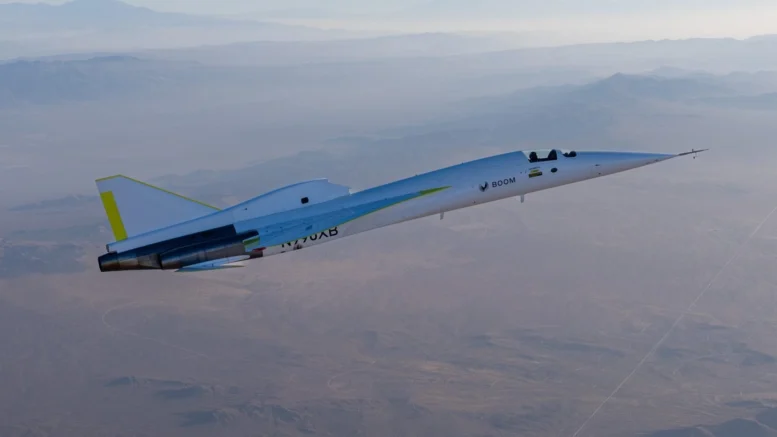
“Thanks to massive innovations in supersonic technology, it will be possible to safely operate these innovative aircraft without a sonic boom,” the FAA stated, emphasizing that the rule changes will provide critical regulatory certainty to the aviation market. Industry leaders like Boom Supersonic have already successfully validated this technology, demonstrating the Mach cut-off phenomenon during flight tests with its XB-1 demonstrator aircraft.
Lifting the restriction promises to radically shrink global flight times, accelerating the movement of passengers and high-priority cargo across the country. The initiative is designed to jumpstart the commercial supersonic industry and ultimately deliver the immense time-saving benefits of high-speed transit directly to the traveling public.