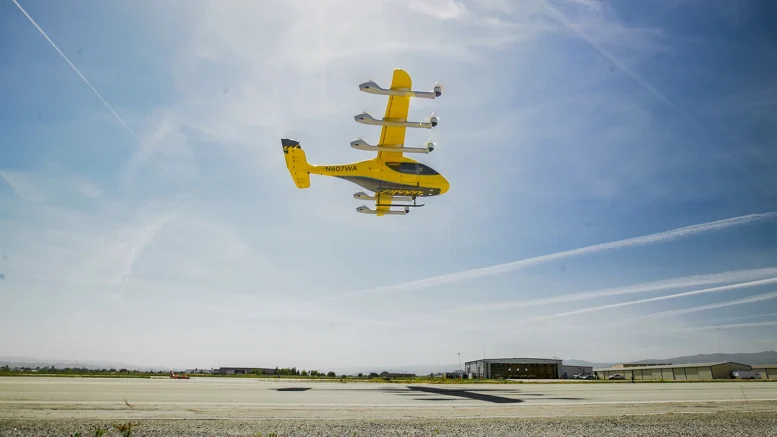
Aviation News – Wisk Aero has successfully completed the maiden flight of its second Generation 6 autonomous aircraft, marking a major expansion of its flight test program. This milestone, achieved in Hollister, California, significantly increases the company’s data collection capacity as it moves toward certifying the world’s first autonomous air taxi.
The flight test program reached this new phase just months after the first Generation 6 aircraft began its campaign in mid-December. By launching a second active flight vehicle, Wisk Aero is demonstrating a rapid scale-up of its development infrastructure. The company, backed by industry giants like Boeing, is positioning itself as a leader in the Advanced Air Mobility (AAM) sector by prioritizing fully autonomous systems over piloted alternatives.
During the mission at the Hollister flight test facility, the aircraft successfully executed a series of critical maneuvers, including a vertical takeoff, hovering, and specialized “chirp” maneuvers. These tests are vital for characterizing the aircraft’s performance and ensuring the flight control laws are properly tuned. The deployment of multiple test assets allows the engineering teams to validate systems in parallel, drastically reducing the time required for comprehensive safety evaluations.
The Generation 6 aircraft is a sophisticated eVTOL (electric Vertical Takeoff and Landing) vehicle designed for urban environments. It utilizes an autonomous flight system that eliminates the need for an onboard pilot, relying instead on advanced sensors and software to navigate. This technical approach is intended to maximize passenger safety by removing human error while increasing operational efficiency for future high-frequency air taxi networks.
“Seeing the second Gen 6 aircraft take to the skies is a proud moment for Wisk,” said Sebastien Vigneron, CEO of Wisk. “This pace of execution is exactly what is required to meet the rigorous safety standards of commercial aviation. Having multiple aircraft in flight testing allows us to move faster, learn quicker, and stay on the leading edge of autonomous aviation.”
The expansion of the flight test fleet suggests an aggressive timeline for FAA certification and the eventual launch of commercial services. As Wisk continues to accumulate flight hours, the data gathered will be instrumental in proving the reliability of autonomous flight to global regulators. This progress signals a shift in the aviation industry toward a future where pilotless electric transport becomes a standard part of urban infrastructure.
Wisk Aero’s dual-aircraft testing strategy places the company on a fast track to revolutionize urban travel. By focusing on autonomous technology and electric propulsion, they are addressing both environmental concerns and the need for faster city transit. The successful integration of these systems during the current test phase paves the way for a new era of commercial aviation.