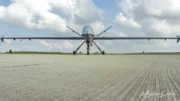
AviationNews – The governments of Germany and Ukraine have entered into a strategic partnership to manufacture advanced Unmanned Aerial Vehicle (UAV) systems capable of reaching distances of up to 1,500 kilometers. This collaboration aims to provide a localized industrial base for high-endurance surveillance and precision-strike capabilities, significantly shifting the defense landscape in Eastern Europe.
The agreement serves as a major expansion of the “Brave Germany” initiative, bringing together German engineering expertise and Ukrainian combat-tested innovation. Signed during a recent defense summit in Kyiv, the deal establishes dedicated production lines on Ukrainian territory to ensure a steady supply of aerial systems. This development follows months of technical discussions between defense ministries and private aerospace firms, focused on creating a self-sufficient ecosystem for UAV-systemen (UAV systems) that can operate independently of traditional international supply chains.
Technically, these new drones utilize advanced long-range propulsion and satellite-linked navigation to maintain operational control at a range of 1,500 kilometers. This technical leap allows for deep-penetration strategic surveillance, providing commanders with real-time intelligence far beyond the immediate front lines. Operationally, the localized manufacturing means that airframes can be rapidly adapted or repaired, ensuring a high mission-readiness rate for precision operations that require extreme endurance and stealth.
“This joint production venture is a testament to our shared commitment to technological sovereignty,” said a senior defense official involved in the project. “By producing these 1,500-kilometer range systems locally, we are not just delivering equipment; we are building a long-term strategic advantage that ensures security and innovation go hand-in-hand.”
Looking forward, the success of this production line may pave the way for further cooperation in jet-powered drones and integrated electronic warfare suites. For the aerospace industry, this move signals a trend toward decentralized, high-tech manufacturing in active conflict zones to bypass logistical bottlenecks.
The partnership effectively combines high-reach capabilities with industrial resilience, setting a new standard for international defense cooperation. As these systems enter active service, they are expected to redefine regional aerial monitoring and long-distance operational strategy for years to come.