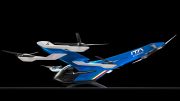
Aviation News – Electra has released its inaugural Direct Aviation Market Outlook, revealing a massive demand for regional travel that could be revolutionized by ultra-short takeoff and landing (eSTOL) aircraft. The report identifies millions of daily trips across the United States that are currently too long to drive comfortably yet are poorly served by traditional airports.
The analysis highlights that regional travel in the U.S. is already a massive existing market, with approximately 35 million passenger trips occurring daily by car over distances between 50 and 500 miles. This accounts for a staggering 1.6 trillion passenger-miles annually. Despite this volume, more than 80 percent of these trips lack a practical flight option, leaving travelers with no choice but to face highway congestion and long transit times.
The data specifically pinpoints over 6,000 routes where more than 1,000 people travel every single day. Most of this demand is concentrated in the “sweet spot” of 50 to 265 miles. Electra’s research suggests that traditional aviation infrastructure is failing these corridors, as large commercial hubs are often located too far from travelers’ actual origins and destinations, making the door-to-door journey inefficient.
By utilizing hybrid-electric technology and ultra-short takeoff capabilities, Direct Aviation allows aircraft to operate from small spaces such as parking lots, grass fields, or short regional runways. This operational flexibility eliminates the need for massive infrastructure, allowing planes to land closer to where people live and work. The result is a significant reduction in friction, potentially slashing hours off total travel times for tens of millions of commuters.
“Aviation is entering a new era, where capabilities that weren’t possible before are now fundamentally changing how we move,” said Marc Allen, CEO of Electra. “Direct Aviation is how that shift shows up in the real world, giving people the ability to go from where they are to where they want to go without the time, friction, and constraints that define travel today.”
This shift signals a move toward a more decentralized transportation network that prioritizes regional mobility and environmental sustainability. As the technology matures, it will likely reshape urban planning and professional life by making long-distance commuting a viable, rapid reality.
Electra’s findings confirm that a massive, unserved market is waiting for a more agile form of flight. By bridging the gap between driving and commercial flying, Direct Aviation promises to transform the American transit landscape. The future of travel lies in connecting passengers directly to their destinations with unprecedented speed and efficiency.