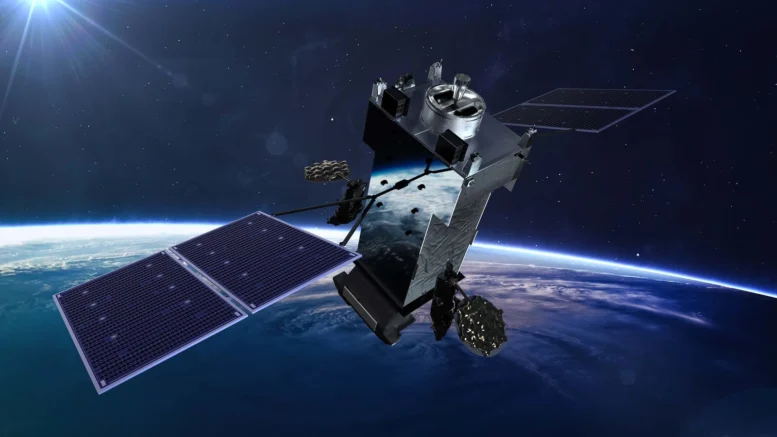
Raytheon, an RTX business, has successfully delivered its second advanced sensor payload to Lockheed Martin for the U.S. Space Force’s Next-Generation Overhead Persistent Infrared (Next-Gen OPIR) program. This critical delivery supports the development of the Geosynchronous Earth Orbit (GEO) Block 0 satellites, designed to provide superior missile warning and tracking capabilities against global threats.
The delivery marks a major milestone in the Next-Gen OPIR (NGG) program, which aims to modernize the nation’s space-based defense infrastructure. This partnership between Raytheon and Lockheed Martin serves as a core component of the military’s strategy to replace aging surveillance systems. The collaboration focuses on creating a resilient network capable of identifying advanced missile technology in an increasingly contested environment.
Following the selection of RTX to provide these high-performance payloads, the program has moved swiftly through its development phases. These sensors are intended to be integrated into the Lockheed Martin-built spacecraft, ensuring the U.S. Space Force maintains a constant, unblinking eye over potential launch sites across the globe. This second delivery confirms that production is scaling to meet the rigorous timeline required for national security.
The sensors utilize advanced optical designs and sophisticated algorithms to identify the specific heat signatures of missile launches. Unlike traditional systems, this technology is specifically tuned to detect and track hypersonic weapon systems and other maneuverable threats that move at extreme speeds. By improving sensitivity and tracking performance, the payload allows for faster response times and more accurate data relay within the broader missile warning architecture.