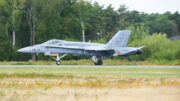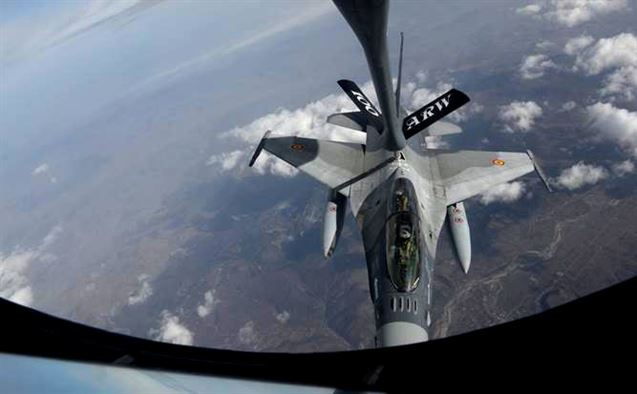
AviationNews – NATO member Romania deployed two F-16 fighter jets early Wednesday morning following a significant Russian drone strike targeting Ukrainian infrastructure near the Romanian border. The military response highlights the increasing frequency of aerial threats escalating along the alliance’s eastern flank.
The Romanian Ministry of Defense confirmed that 17 Russian drones were detected near the northern district of Tulcea. While the unmanned aerial vehicles (UAVs) did not violate Romanian airspace, their proximity to civilian and industrial targets in Ukraine prompted an immediate defense protocol. The jets launched from the 86th Air Base in Borcea, while ground-based anti-aircraft systems were placed on high alert to monitor the situation in real-time.
This operational scramble serves as a standard precautionary measure intended to protect sovereign territory and provide air policing services. Residents in the Tulcea region received “extreme warning” mobile alerts at approximately 3:44 AM, advising them of the potential for falling debris. These measures have become a grim necessity for border nations like Romania and Poland, which must balance territorial defense with the strategic goal of avoiding direct conflict with Russian forces.
“The Ministry of National Defense has reinforced measures to monitor and survey national airspace,” a spokesperson for the Romanian authorities indicated, emphasizing that the deployment was a necessary reaction to the Russian Federation’s attacks on nearby Ukrainian targets.
As the conflict continues, the risk of accidental escalation remains high for NATO’s eastern members. Frequent scrambles and public warnings are now a routine reality for those living on the edge of the war zone, putting sustained pressure on the alliance’s defensive capabilities and response times.
The recent incident in Tulcea marks the 70th emergency alert issued to Romanian border districts since the invasion began in 2022. As Russia intensifies its strikes on Ukrainian port infrastructure, NATO members are expected to maintain a heightened state of aerial vigilance to ensure border integrity remains intact.