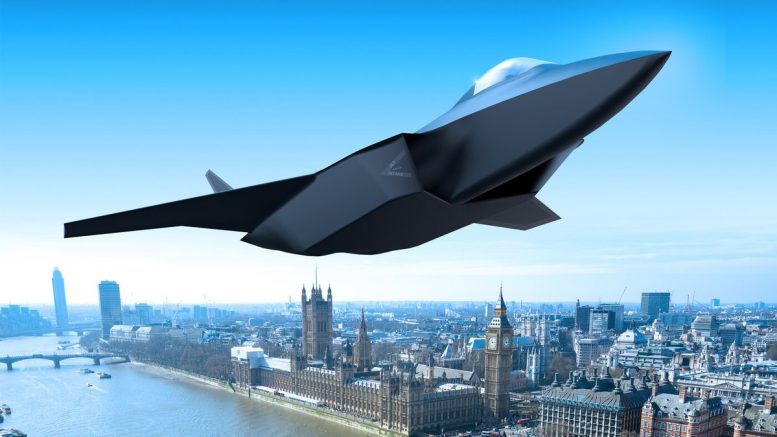
AviationNews – The United Kingdom, Italy, and Japan have officially entered into a £686 million contract to accelerate the development of the Global Combat Air Program (GCAP), a collaborative effort to build a next-generation fighter jet. This strategic partnership aims to redefine aerial superiority by merging the technological prowess of three major nations into a single, unified defense initiative.
This significant financial commitment follows the formal selection of the GCAP framework, which seeks to replace aging fleets with a highly advanced supersonic platform. The partnership involves key aerospace leaders such as BAE Systems, Leonardo, and Mitsubishi Heavy Industries, who are tasked with designing a modular aircraft that can adapt to evolving global threats. This latest funding phase solidifies the timeline for the aircraft to be combat-ready by the mid-2030s.
Technically, the GCAP aircraft is designed as a digital-first platform, utilizing high-speed data processing and advanced sensors to provide pilots with unprecedented situational awareness. Beyond the physical airframe, the program emphasizes integrated sensors and autonomous capabilities, allowing the jet to act as a central hub for a network of drones and satellite assets. This “system of systems” approach ensures the aircraft remains effective in increasingly complex electronic warfare environments.
“This contract represents a significant milestone in our shared mission to deliver a world-class combat air capability,” stated a spokesperson for the joint program. “By combining our national expertise, we are not only sharing the immense costs of development but also ensuring that our air forces remain at the cutting edge of technological innovation for decades to come.”
Looking ahead, the GCAP is expected to drive economic growth and high-tech job creation across all three participating nations. As the design phase transitions into prototype testing, the program will likely attract further international partners interested in its open-architecture design. Stakeholders are now focused on streamlining the supply chain to meet the ambitious delivery schedule.
The agreement marks a pivotal shift toward international defense consolidation, ensuring the UK, Italy, and Japan maintain a strategic edge. By 2035, this collaboration is poised to deliver one of the most sophisticated defense assets in history, securing the future of global airspace.


