Aviation News –
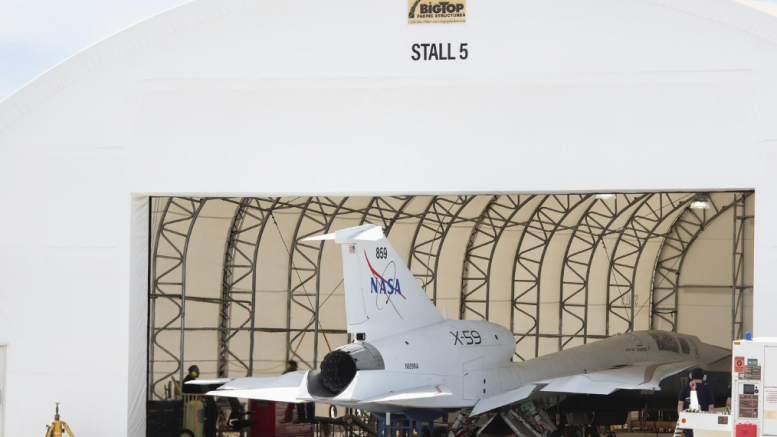
NASA has officially rescheduled the second flight of its X-59 quiet supersonic research aircraft to Friday, shifting the timeline from its original Thursday window. The mission, departing from the Armstrong Flight Research Center in Edwards, California, serves as a critical step in evaluating the aircraft’s early-stage handling and performance metrics.
This second flight follows the aircraft’s successful maiden voyage in October 2025, which focused on basic systems checks and initial pilot handling. The upcoming mission will involve operations at Edwards Air Force Base, utilizing the expansive desert airspace to push the experimental airframe through a more rigorous set of flight envelopes.
During the planned one-hour mission, pilots will initially operate the X-59 at 230 mph while maintaining an altitude of 12,000 feet. The flight profile then calls for the aircraft to climb to 20,000 feet, where it will accelerate to approximately 260 mph. These controlled maneuvers allow engineers to gather vital data on how the unique “low-boom” design responds to varying speeds and atmospheric pressures.
The technical relevance of the X-59 lies in its QueSST (Quiet SuperSonic Technology) geometry, which is designed to dissipate shockwaves and prevent the traditional sonic boom from reaching the ground. By reshaping the aircraft to create a soft “thump” instead of a window-rattling blast, NASA aims to provide the data necessary for regulators to reconsider the current ban on commercial supersonic flight over land.
“This flight represents a deliberate progression in our flight test campaign to ensure the aircraft performs exactly as modeled,” a NASA project representative stated. “Every minute of data we collect brings us closer to a future where supersonic travel is both fast and quiet for those on the ground.”
The success of these early evaluations will eventually lead to acoustic testing over various U.S. cities. If the X-59 continues to meet its performance goals, it could catalyze a revolution in civil aviation, slashing cross-country travel times while meeting modern environmental and noise standards.
This strategic flight test at Edwards Air Force Base reinforces the aircraft’s role as a pioneer for the next generation of high-speed travel. As NASA continues to refine the X-59’s capabilities, the aerospace industry moves one step closer to making quiet supersonic flight a commercial reality.