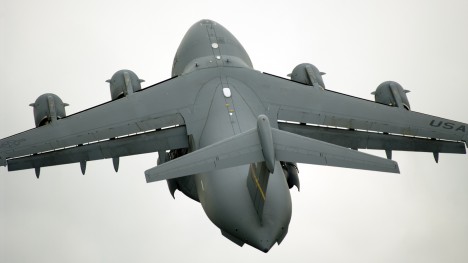
Aviation News – U.S. Departments of Energy and Defense have successfully airlifted a small nuclear microreactor (without nuclear fuel) aboard a military C-17A Globemaster III cargo aircraft from California to Utah, demonstrating how compact reactors could be rapidly deployed to supply power for remote bases or disaster zones.
The milestone flight was conducted jointly by the U.S. Department of Energy and the U.S. Department of Defense in partnership with California-based Valar Atomics. One of the company’s Ward microreactors, transported without nuclear fuel for safety, was flown from California to Hill Air Force Base in Utah. Energy Secretary Chris Wright and Under Secretary of Defense for Acquisition and Sustainment Michael Duffey accompanied the shipment, underscoring the strategic importance of the demonstration.
The microreactor system is designed to be compact and modular, allowing it to be transported by standard military airlift and installed quickly in austere environments. Once fueled and activated, it can provide reliable, carbon-free electricity for forward operating bases, emergency response sites, or isolated communities where diesel generators are costly or vulnerable to supply disruptions. Officials say the test validates both the logistics and safety processes required for rapid deployment.
“This demonstration shows we can move advanced nuclear technology quickly and safely wherever it’s needed,” a department spokesperson said. “Portable reactors offer resilient energy that strengthens national security and supports civilian disaster response.”
Looking ahead, the agencies plan further testing, including integration exercises and operational trials, to determine how such systems could support long-duration missions or humanitarian operations. The effort also aligns with broader U.S. goals to accelerate advanced nuclear energy and reduce dependence on fossil fuels in remote operations.
By proving that a reactor can be transported by air like any other critical asset, the government has taken a tangible step toward making deployable nuclear power a practical tool rather than a theoretical concept. If future trials succeed, compact reactors could soon become standard equipment for both military logistics and emergency infrastructure support.

