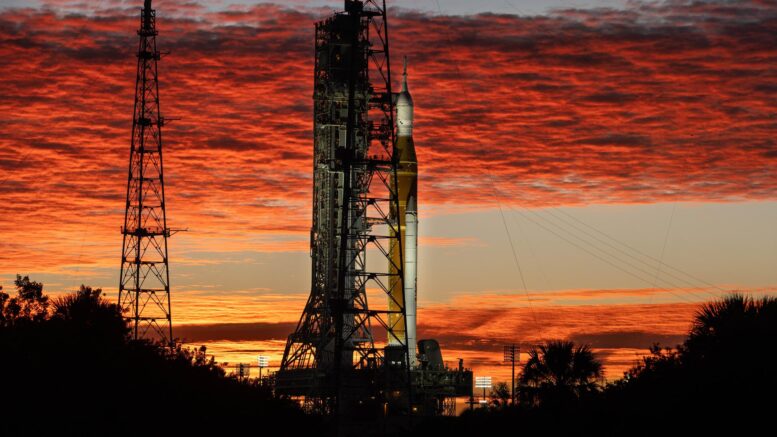
Aviation News – NASA is preparing to potentially roll back its Artemis II launch vehicle from the pad after engineers detected an interruption in helium flow to the Space Launch System (SLS) upper stage, a move that could briefly delay preparations for the agency’s first crewed lunar mission in decades.
The issue emerged overnight on Feb. 21 as teams monitored systems at the agency’s Kennedy Space Center in Florida. Engineers began reviewing data and readying rollback procedures to the Vehicle Assembly Building, where troubleshooting can be carried out in a more controlled environment. Preparations include removing pad access platforms that cannot be safely detached during forecast high winds, ensuring flexibility to address the anomaly either at the launch pad or inside the assembly facility.
The upper stage relies on helium to regulate environmental conditions for the engine compartment and to pressurize liquid hydrogen and liquid oxygen tanks. While systems functioned during earlier wet dress rehearsals, teams were unable to sustain normal helium flow during post-test reconfiguration. Operators have switched to a backup method to maintain safe conditions, keeping the rocket in a stable configuration while diagnostics continue.
“We are actively reviewing the data and positioning the vehicle so we can address the issue quickly and safely,” a NASA spokesperson said, adding that contingency systems are protecting the rocket while engineers determine the best path forward.
If a rollback proceeds, technicians will gain improved access to inspect valves, lines and pressurization hardware, potentially reducing risk ahead of launch. Although the move may adjust the timeline, officials say resolving the anomaly now strengthens mission reliability and crew safety.
The Artemis II flight will carry astronauts around the Moon as the first human mission of NASA’s Artemis program. By prioritizing careful checks and redundancy, the agency aims to keep the campaign on track and ensure the heavy-lift rocket performs as designed. For NASA, addressing small technical concerns early remains essential to delivering a safe return to deep space exploration.
