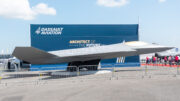
Aviation News – Airbus has warned that Europe’s flagship next-generation fighter programme could split into separate national efforts, with the company prepared to support either a joint or divided path as uncertainty grows around the Future Combat Air System (FCAS). The outcome matters because the project is central to Europe’s plan to replace aging combat fleets and maintain technological sovereignty.
Speaking in an interview with BFM TV, Airbus chief executive Guillaume Faury said continued cooperation between France and Germany remains the preferred option, but acknowledged that two distinct French- and German-led programmes are now a realistic scenario. The FCAS initiative, originally conceived as a joint European defence project, has faced delays and industrial disagreements over leadership roles, workshare and intellectual property since its selection and early development phases.
At its core, FCAS is designed to combine a crewed Next Generation Fighter with remote carrier drones, advanced sensors and a digital combat cloud that links aircraft, satellites and ground assets in real time. The system aims to provide greater survivability, networked warfare capabilities and long-term independence from non-European suppliers, replacing current fighters through the 2040s and beyond.
Faury stressed the importance of preserving cooperation where possible. “We hope Europe can continue to co-develop this aircraft,” he said, adding that Airbus remains ready “for any scenario” if governments decide to pursue separate solutions while still sharing broader systems or technologies.
If the project fragments, analysts say Europe could see parallel fighter developments that increase costs but accelerate national control over timelines and design choices. A unified programme, however, would spread risks and sustain cross-border industrial collaboration.
Whichever path emerges, Airbus’ message signals pragmatism rather than retreat. The company intends to remain a central player in Europe’s future air combat architecture, either as a partner in a joint fighter or as the lead in an independent effort. The coming months of political and industrial negotiations are likely to determine whether FCAS remains a shared European ambition or evolves into competing national jets.