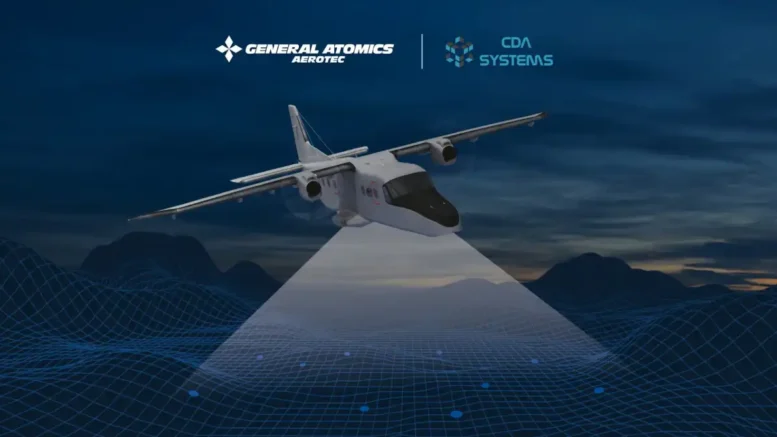
AviationNews – General Atomics AeroTec Systems (GA-ATS) has announced the integration of the CPLS SENTINEL sensor into its Do228 NXT aircraft, a move designed to drastically improve the efficiency of search and rescue (SAR) and maritime patrol operations worldwide. This partnership with Andorra-based CDA Systems provides operators with a critical tool for locating missing individuals by pinpointing mobile signals in environments where traditional infrastructure has failed.
The selection of the SENTINEL system, announced on January 19, 2026, marks a significant milestone in the development of the Do228 NXT as a premier multi-role platform. Developed by CDA Systems, the sensor uses innovative precision optics and aerospace communication technology to transform the aircraft into a highly capable hub for disaster response, humanitarian missions, and law enforcement. By offering this advanced geolocation tool, GA-ATS addresses the growing global demand for versatile aircraft capable of performing complex surveillance in remote or devastated regions.
Technically, the CPLS SENTINEL operates as a secure, non-intrusive base station that detects a target phone’s ID through Phase Difference of Arrival (PDOA) analysis. This allows the flight crew to locate a device with exceptional accuracy without accessing private data or requiring a live cellular network. The system’s intuitive interface provides the operator with real-time directional cues and mapping support, while the Do228 NXT’s rectangular fuselage and multiple installation points ensure the hardware is integrated seamlessly without compromising the aircraft’s short takeoff and landing (STOL) performance.
“The addition of the SENTINEL to our sensor suite further solidifies the Do228 NXT as the leading platform for multi-role missions,” stated a representative from General Atomics AeroTec Systems. “This technology allows our operators to execute border surveillance and medical evacuations even more effectively, providing life-saving capabilities where they are needed most.”
Looking ahead, the integration of such high-precision cellular geolocation technology is expected to set a new standard for special mission aircraft. As global climate events and maritime traffic increase, the need for rapid, sensor-driven disaster relief will only grow.
In conclusion, the pairing of the Do228 NXT with the CPLS SENTINEL creates a formidable asset for international rescue teams. This development ensures that General Atomics remains at the forefront of the aerospace industry, providing flexible and reliable solutions for the world’s most challenging environments.