Aviation News – Putin Admits Russian Missiles Accidentally Brought Down Azerbaijani Passenger Jet
Russian President Vladimir Putin has admitted that Russian anti-aircraft missiles were responsible for downing an Azerbaijan Airlines passenger jet last December, after the weapons were launched in response to nearby Ukrainian drone activity. The incident, which killed 38 people, has reignited international concern over the risks of military operations near civilian air corridors.
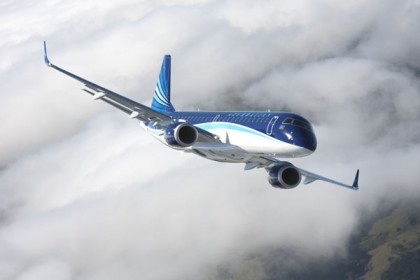
Speaking alongside Azerbaijani President Ilham Aliyev in Dushanbe, Tajikistan, on October 9, 2025, Putin stated that Russian missiles were fired near Grozny, Chechnya, at the time of the tragedy. The Embraer E190, registered 4K-AZ65, was operating flight J28243 from Baku to Grozny when it crashed in western Kazakhstan on December 25, 2024. The aircraft was carrying 62 passengers and five crew members; 29 people survived the crash.
Putin explained that the two missiles “did not directly hit the plane but exploded, perhaps by self-destruction, about ten meters away.” The resulting debris, he said, caused the aircraft’s fatal damage rather than the missiles’ combat payloads. The Russian president framed the launch as a defensive reaction to what military radar identified as Ukrainian drone activity in the region.
“This is a terrible tragedy,” Putin said, expressing regret to Azerbaijan and the victims’ families. “The incident occurred as a result of unforeseen circumstances during an air defense operation. We will cooperate fully in clarifying all details with our Azerbaijani partners.”
The admission marks a significant development in the ongoing investigation and could have diplomatic repercussions for Moscow and Baku. Both countries are expected to coordinate with international aviation authorities to review safety procedures and prevent similar incidents in the future.
The downing of flight J28243 underscores the growing dangers of civilian aviation operating near conflict zones. As inquiries continue, the tragedy stands as a sobering reminder of the consequences when defense systems and civil air traffic intersect under tense regional conditions.