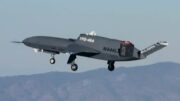
AviationNews – Northrop Grumman and the U.S. Air Force are in active negotiations to accelerate the production of the B-21 Raider, America’s next-generation stealth bomber. This move aims to field the advanced strategic asset more quickly to modernize the nation’s deterrent capabilities.
The discussions follow a recent congressional appropriation of $4.5 billion specifically to increase manufacturing capacity for the B-21 program. The aircraft, which first flew in late 2023, is currently in its low-rate initial production (LRIP) phase. The Air Force awarded the first LRIP contract in early 2024 and plans to purchase at least 100 of the new bombers to replace its aging B-1 Lancer and B-2 Spirit fleets.
As the world’s first sixth-generation aircraft, the B-21 Raider is a penetrating strike stealth bomber designed to operate in the most advanced threat environments. It is a dual-capable platform, able to deliver both conventional and nuclear munitions. The program utilizes an open-systems architecture and digital engineering, allowing for rapid upgrades and more efficient production, forming the bolt of the future U.S. bomber force.
During a recent earnings call, Northrop Grumman CEO Kathy Warden confirmed the ongoing talks. “We are in active discussions with the customer that would enable that acceleration of production rate… we still expect that in the coming months, we would have more clarity on what that acceleration might look like,” Warden stated, noting the program’s strong progress.
An accelerated timeline would significantly shorten the window for recapitalizing the U.S. strategic bomber fleet, a top priority for the Pentagon. The Air Force is already preparing for the new aircraft, with two B-21s engaged in flight testing and multiple other units in various stages of ground tests. Northrop Grumman expects to receive contract awards for the third LRIP lot by the end of 2025.
These negotiations underscore the urgency the Department of Defense places on the B-21 program. A successful agreement to speed up production would deliver this critical capability to the warfighter years ahead of the original schedule, reinforcing U.S. strategic deterrence for decades to come.