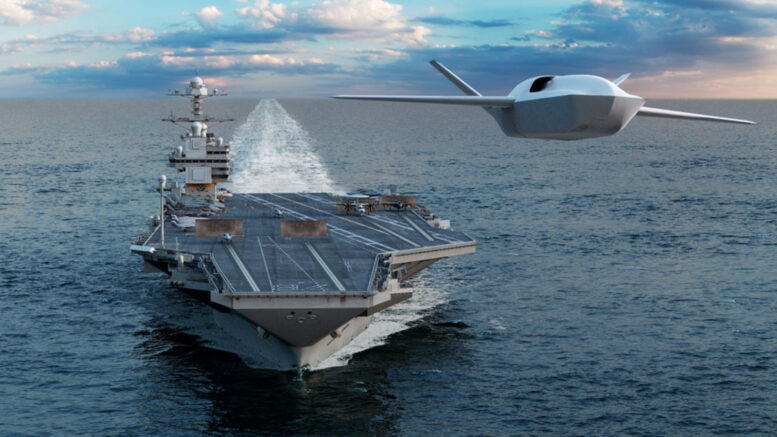
Aviation News – General Atomics Aeronautical Systems, Inc. (GA-ASI) has been selected by the U.S. Navy to develop conceptual designs for a new class of Collaborative Combat Aircraft (CCA) to support the carrier air wing of the future. The program marks a major step toward integrating autonomous aircraft into naval aviation operations.
GA-ASI’s contract focuses on designing modular, rapidly reconfigurable drones that can adapt to diverse mission needs, including carrier-based operations. The selection aligns with the Navy’s shift toward faster, more flexible procurement strategies—favoring smaller, iterative development cycles over traditional, decades-long programs. The award follows GA-ASI’s recent milestone with the U.S. Air Force, where the company’s YFQ-42A became the first Air Force CCA to enter flight testing in August.
The new Navy CCA concept will emphasize a modular platform design, allowing for quick technology upgrades, mission-specific payload swaps, and seamless integration with existing naval assets. This approach is expected to boost operational flexibility and maintain U.S. technological superiority in contested environments.
“GA-ASI is honored to partner with the Navy on this groundbreaking initiative,” a company spokesperson said. “Our experience with the Air Force’s CCA program provides a strong foundation for delivering advanced, carrier-capable autonomous aircraft that will redefine the future of naval aviation.”
Looking ahead, the Navy’s CCA initiative could transform carrier operations by enabling manned-unmanned teaming and enhancing the reach, resilience, and lethality of carrier strike groups. The program also underscores a broader Pentagon push toward distributed, networked air combat capabilities.
In summary, GA-ASI’s partnership with the Navy represents a pivotal move toward integrating autonomous systems in carrier air wings. The development could usher in a new era of smart, agile, and adaptable unmanned aircraft designed to keep pace with rapidly evolving threats.