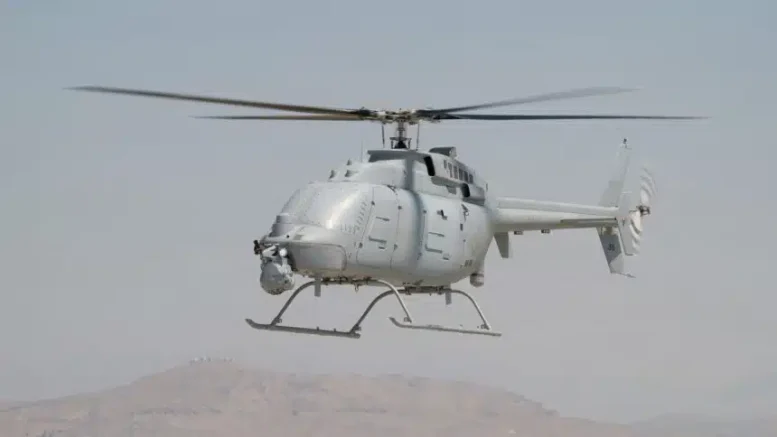
Aviation News – The U.S. Navy has transferred four retired MQ-8C Fire Scout unmanned helicopters to the U.S. Army, a strategic interservice handoff projected to save over $70 million in procurement costs.
The aircraft, previously slated for retirement under naval fleet restructuring, have found a second operational life supporting critical defense research. The U.S. Army took delivery of the unmanned platforms to bolster ongoing sensor testing programs. The transfer bridges a vital capability gap by repurposing proven assets instead of investing in brand-new development vehicles, directly benefiting defense budget efficiency.
The hardware handoff places the rotary-wing drones under the management of the Army’s Redstone Test Center (RTC). The center has already wrapped up comprehensive ground evaluations and commenced active flight testing at Dugway Proving Ground in Utah and Redstone Arsenal in Alabama. These trials are designed to evaluate advanced sensor packages and payload integrations under rigorous operational conditions.
The MQ-8C Fire Scout operates as an autonomous helicopter capable of executing long-endurance intelligence, surveillance, and reconnaissance (ISR) missions. Its uncrewed architecture minimizes personnel risks while delivering persistent situational awareness across complex combat environments. By utilizing these platforms for developmental testing, engineers can accelerate the maturation of next-generation military sensors and targeting systems.
“This interservice collaboration allows us to maximize existing defense assets while significantly reducing overall program acquisition expenditures,” noted military defense planners familiar with the initiative.
The successful integration of these platforms sets a precedent for future inter-branch equipment sharing and cost-saving measures across the armed forces. As flight trials progress at Dugway and Redstone, the data gathered will directly shape the roadmap for future autonomous tactical systems.