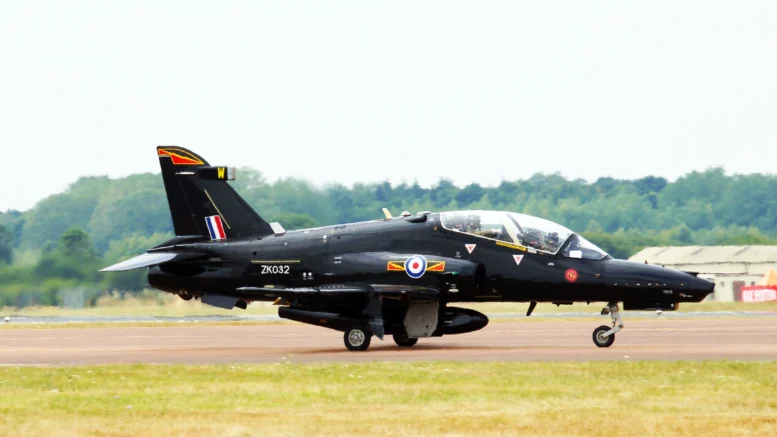
Aviation News – Ground personnel error caused a multi-million RAF Hawk T.2 (ZK032) jet to crash and burst into a fireball near RAF Valley after maintenance staff allegedly failed to refit its fuel cap, an official inquiry has found. The catastrophic oversight forced both crew members to execute an emergency ejection after steering the burning aircraft away from nearby residential structures.
The serious incident occurred on September 23 shortly after the training jet departed from the Anglesey airfield facility in North Wales. Moments into its initial climb, the aircraft began ascending irregularly before being engulfed in massive flames. Inside the cockpit, an experienced pilot and a trainee reacted swiftly to steer the damaged aircraft away from civilian buildings before activating their ejection seats.
Both aircrew members parachuted safely to the ground and sustained only minor injuries during the emergency landing. The unmanned Hawk T2 subsequently plunged to the earth and detonated on agricultural land located close to Pencarnisiog and the Afallon Caravan Park in Llanfaelog. A source familiar with the investigation confirmed that ground crew failing to secure the fuel cap forms a central focus of the ongoing inquiry into safety standards.
During flight, an exposed fuel filler neck can lead to rapid fuel spillage, air pressure disruption, and fuel vapor coming into contact with high-temperature engine components. Ignition of escaping jet fuel creates an immediate fire hazard, leading to rapid loss of engine power and control system failure. The sudden explosion underscores the vital role that routine ground servicing procedures play in maintaining high-altitude flight safety.
“It’s a pretty poor indicator of standards,” disclosed an insider regarding the ground team’s critical oversight during pre-flight maintenance. “The unattached fuel cap represents a significant part of the investigation into the catastrophe.”
The findings are expected to prompt a thorough review of maintenance protocols and quality control checks across military training facilities. Standard operating procedures for ground crews will likely face increased scrutiny to prevent similar servicing oversights in future flight operations. Air force leadership will evaluate ground operations to ensure strict adherence to servicing checklists before approving flight clearances.
The inquiry into the RAF Hawk T2 crash highlights how a minor ground maintenance oversight can result in the total destruction of a military aircraft. Quick thinking by the flight crew successfully prevented civilian casualties near RAF Valley. Moving forward, tightened maintenance standards will remain essential to safeguard flight personnel and defense assets.