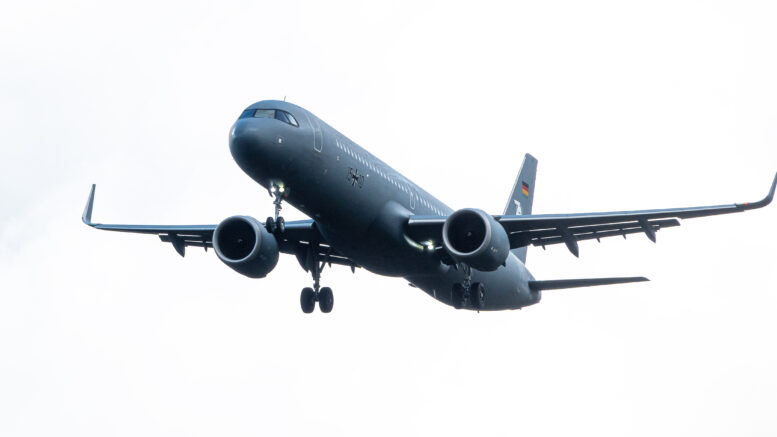
Aviation News – The Spanish Air and Space Force has selected the Airbus A321 commercial airliner as the foundation for its upcoming fleet of crewed signals intelligence (SIGINT) aircraft. This strategic selection lays the groundwork for rebuilding Spain’s national airborne reconnaissance architecture and could eventually support a wider range of military surveillance applications.
The Santiago II-SCAPA program marks a vital shift in defense modernizations for Spain, replacing retired intelligence platforms with advanced crewed collection systems. Disclosed through the official military publication Revista de Aeronáutica y Astronáutica, the Airbus A321 selection provides a domestic industrial baseline for national intelligence collection. Although Spain’s Ministry of Defense, defense electronics leader Indra, and primary manufacturer Airbus have not issued a joint formal declaration, the strategic initiative reflects a multi-decade effort to secure sovereign intelligence systems.
By adapting a proven commercial twin-engine airliner into a military reconnaissance vehicle, the military optimizes mission payload and operational flexibility. High-end signals intelligence systems gather electronic emissions, intercept communication networks, and map adversary radar arrays across vast geographical regions. Selecting a standardized commercial airframe like the Airbus A321 ensures longer range, significant cabin space for mission operators, and lower maintenance costs over the service life of the fleet.
An official statement in the military publication emphasized the strategic potential of the chosen commercial platform: “Having chosen the A321 for its SIGINT program (Santiago II-SCAPA), there would be the possibility of extending this program to a national AEW solution.”
Standardizing on a single large-cabin airframe establishes an efficient pathway for future defense acquisitions. Beyond signals intelligence, adapting the Airbus A321 platform for Airborne Early Warning (AEW) capabilities would significantly bolster airborne radar coverage and strategic command sovereignty. Integrating specialized electronic warfare suites on a common national fleet promises simplified maintenance schedules, streamlined aircrew training, and cost-effective operational deployment.
The Spanish Air and Space Force addresses a critical operational gap in sovereign reconnaissance capabilities by moving forward with the Airbus A321 airframe. Selecting a flexible civil architecture allows military leadership to combine high-altitude signals intelligence with future airborne early warning capabilities under a single industrial program. This strategic investment strengthens national autonomy while creating a versatile foundation for European defense collaboration.