AviationNews – American Airlines flight AA1009, a crucial transcontinental service connecting Chicago to Los Angeles, was forced to declare an inflight emergency and return safely following an unexpected technical malfunction on Tuesday, October 6, 2026.
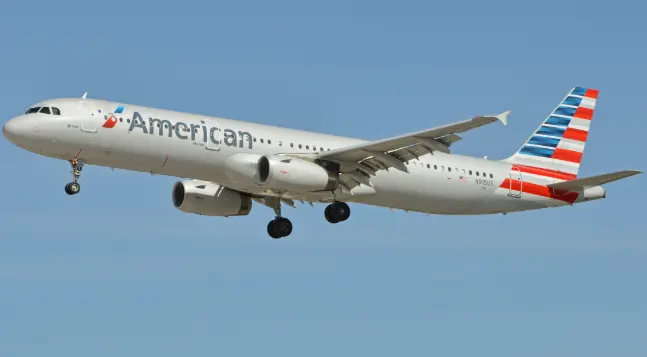
The affected aircraft, an Airbus A321-211 bearing the registration N194UW, departed from Chicago O’Hare International Airport bound for Los Angeles International Airport. Shortly after clearing the departure phase, the flight crew flagged an onboard technical issue, prompting them to squawk 7700—the universal code for an aircraft emergency—to secure priority handling and a swift return path. Chicago O’Hare serves as a major stronghold and the second-largest hub for American Airlines, meaning any unexpected disruption to a key transcontinental routing can trigger widespread schedule adjustments across the carrier’s domestic network.
Operating twin CFM International CFM56 engines, the nearly 18-year-old narrowbody aircraft is a standard workhorse in the American Airlines domestic fleet. Transcontinental routes test the limits of narrowbody equipment, requiring precise coordination between flight decks, maintenance controllers, and regional air traffic management to handle unscheduled diversions seamlessly without compromising system safety.
“Safety remains our absolute highest priority, and our flight crews are rigorously trained to handle unexpected technical anomalies by following established protocols and returning promptly to a maintenance base when required,” noted an airline operations representative following the incident.
As airlines continue to navigate heavy airspace congestion and complex scheduling environments, rapid response protocols ensure that unexpected technical events are resolved with minimal risk to travelers. Passengers affected by the diversion are typically accommodated on alternative flights to ensure they reach their final destination safely, while maintenance teams thoroughly inspect the aircraft systems.
This unexpected interruption highlights the resilience of modern commercial aviation safety networks. Swift communication between flight crews and ground control successfully mitigated potential risks, proving once again that safety procedures are robust enough to handle mid-air challenges effectively.