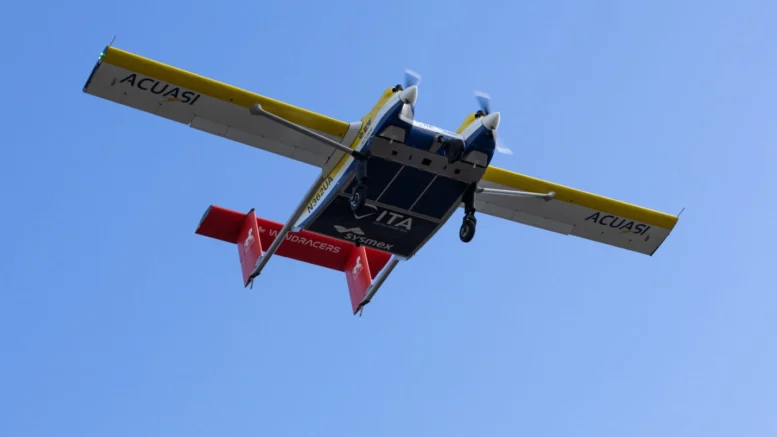
Aviation News – Windracers has successfully completed a historic 1,000-kilometer autonomous flight using its Windracers ULTRA heavy-lift aircraft to evaluate whether biological anti-doping samples can be safely and reliably transported over long distances. The multi-party project aims to solve complex medical logistics and safeguard sample integrity when conventional transport options are slow, unpredictable, or logistically challenging.
The multi-party initiative was led by the International Testing Agency (ITA), an independent organization managing global anti-doping programs, alongside clinical diagnostics pioneer Sysmex. Flight operations were conducted over several hours by unmanned aviation experts at the Alaska Center for Unmanned Aircraft Systems Integration (ACUASI) at the University of Alaska Fairbanks. This landmark trial marks the first Beyond Visual Line of Sight (BVLOS) flight of the Windracers ULTRA heavy-lift drone in North America, proving that long-range autonomous aviation can operate dependably across vast terrain.
The project addresses longstanding logistical hurdles in anti-doping test delivery, which are particularly acute during major international sporting competitions such as the Olympic Games. In these high-stakes environments, rapid, secure, and temperature-stable sample delivery remains essential to preserve sample integrity and ensure fair play. By leveraging heavy-lift autonomous cargo aircraft, anti-doping authorities gain a resilient alternative mode of transport capable of operating independent of traditional ground infrastructure or commercial airline schedules.
The Windracers ULTRA is an autonomous, dual-use heavy-lift aircraft engineered specifically to carry substantial payloads over long distances under extreme environmental conditions. During the test, experts focused on evaluating how long-duration flight dynamics impact sensitive blood samples, ensuring that diagnostic parameters remain unaffected by continuous airborne stress. The success of the mission opens up broader applications for critical medical air cargo, emergency response, and sample transport to remote testing facilities worldwide.
“For years, the ITA has pursued innovative logistics solutions to ensure that anti-doping operations remain fast, reliable, and uncompromised, especially in challenging environments,” said an official involved in the initiative. “Demonstrating that autonomous heavy-lift aircraft can securely transport vital biological samples across hundreds of kilometers marks a significant step forward for clean sport and global anti-doping logistics.”
Looking ahead, the successful trial lays the groundwork for integrating long-range autonomous air cargo into routine testing operations and major tournament logistics. As aviation authorities refine regulations for BVLOS flight, long-distance cargo drones are poised to become an essential tool for high-priority logistics, ensuring critical medical supplies and biological samples reach specialized laboratories without delay.
This successful 1,000-kilometer test flight confirms that autonomous heavy-lift drones offer a viable, efficient alternative for specialized biological transport over long distances. The collaboration between the ITA, Sysmex, Windracers, and ACUASI establishes a strong precedent for using advanced unmanned aviation to secure time-sensitive medical logistics. Continued trials and regulatory integration will further solidify autonomous air freight as a cornerstone of modern anti-doping and global healthcare supply chains.