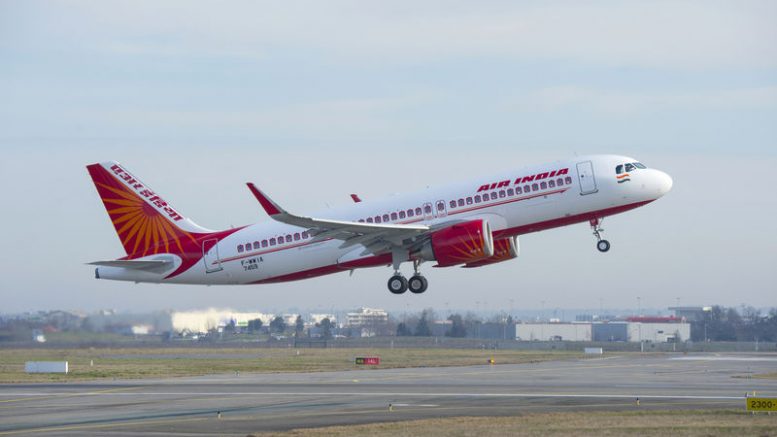
Aviation News – India’s Aircraft Accident Investigation Bureau has revealed that an Air India Airbus A320neo suffered a simultaneous loss of pressure across all three hydraulic systems at 36,000 feet, triggering a severe flight upset that injured 24 people.
The critical safety occurrence took place on August 4, 2026, aboard Air India flight AI2379 en route from Phuket International Airport to Indira Gandhi International Airport in Delhi. Operating the route with 145 passengers and crew on board, the aircraft—registered as VT-EXO—experienced a sudden loss of control surfaces mid-flight. While initial notifications tentatively categorized the mid-air event as a severe turbulence encounter, official safety investigators reclassified the occurrence as an aviation accident following formal injury assessments and technical flight recorder evaluations.
The official preliminary investigation highlights a rapid sequence of system failures beginning at 04:02:43 UTC. The aircraft’s flight control architecture first registered a complete pressure drop in its primary Green hydraulic circuit. Just four seconds later, both the complementary Blue and Yellow hydraulic circuits suffered total pressure loss, stripping the narrowbody jet of its redundant flight control power supplies and causing autopilot disengagement during high-altitude cruise.
In an Airbus A320neo, hydraulic pressure powers crucial flight control surfaces including elevators, ailerons, and rudders. The simultaneous loss of all three independent circuits—normally considered an extraordinary statistical anomaly due to isolated fluid reservoirs and separate engine-driven or electrical pumps—temporarily compromised automated maneuvering, triggering an immediate stall warning and rapid altitude fluctuation before hydraulic pressure spontaneously recovered.
“The flight control system detected a loss of green hydraulic system at 04:02:43 UTC,” stated the Aircraft Accident Investigation Bureau preliminary report. “Four seconds later, it also registered the loss of the blue and yellow systems, leading to autopilot disengagement and an altitude upset before pressure was restored.”
Moving forward, international safety authorities, including representatives from Airbus and France’s BEA, will conduct extensive component teardowns and fluid testing to pinpoint the root cause of the simultaneous pressure drop. Technical findings from this probe will likely yield critical airworthiness directives to safeguard global A320 fleets against similar multi-system failure modes.
Ultimately, the investigation underscores the paramount importance of mechanical redundancy and crew readiness in commercial aviation. While flight crews safely recovered the aircraft and landed in Delhi, the rare triple hydraulic event serves as a crucial case study for flight safety regulators. Continued technical analysis will remain essential to ensuring the long-term reliability of modern fly-by-wire flight control architectures.
