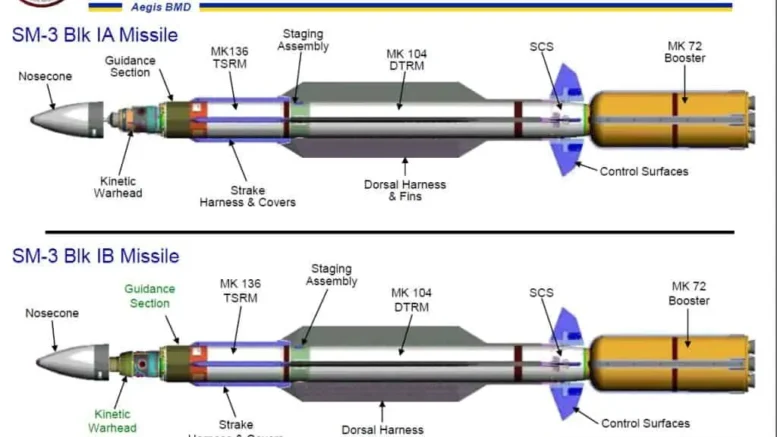
AviationNews – Boeing and the U.S. Department of Defense have established a seven-year framework agreement to expand manufacturing capacity for critical Standard Missile-3 (SM-3) components. The strategic move aims to surge supplies of steering and structural systems for exo-atmospheric interceptors amid mounting global demand for ballistic missile defense.
The agreement positions Boeing to accelerate deliveries of essential hardware, including avionics and canister ejection mechanisms, supporting both the SM-3 Block IB and Block IIA variants. Prime contractor RTX leads the final assembly of the interceptors alongside Japanese industrial partner Mitsubishi Heavy Industries, but recent high-tempo defensive operations depleted allied stockpiles and highlighted the need for industrial expansion. By coordinating directly with the Pentagon and primary manufacturers, Boeing is scaling production ahead of formalized multi-year procurement contracts to stabilize the defense supply chain.
Engineered to operate as the outer tier of the Aegis Ballistic Missile Defense system, the SM-3 destroys short- to intermediate-range ballistic missiles in their midcourse phase above Earth’s atmosphere. The interceptor uses kinetic hit-to-kill technology, relying entirely on the force of direct collision rather than an explosive warhead. Boeing’s specialized subsystems ensure precise deployment and terminal attitude control, giving the missile’s Lightweight Exo-Atmospheric Projectile (LEAP) kinetic warhead the maneuverability required to eliminate maneuvering high-speed threats in space.
“These agreements ensure our Warfighters get the munitions they need to win,” said Michael P. Duffey, Under Secretary of Defense for Acquisition and Sustainment. “We are stabilizing our supply chains, expanding munitions production and putting our entire defense industrial base on a wartime footing.”
Looking ahead, defense planners intend to scale SM-3 annual deliveries from 100 interceptors toward a target of 250 units annually over the course of the agreement. The production ramp-up directly supports both U.S. Navy warships and land-based Aegis Ashore sites in Romania and Poland, fortifying allied air defense umbrellas against emerging missile threats. Defense contractors and allied nations must continue harmonizing industrial investments to ensure sustained readiness across contested theaters.
The expansion marks a decisive effort to transition missile defense manufacturing from peacetime rates to resilient, large-scale production. By addressing critical component bottlenecks early, allied forces ensure a reliable stockpile of high-altitude interceptors for years to come.
