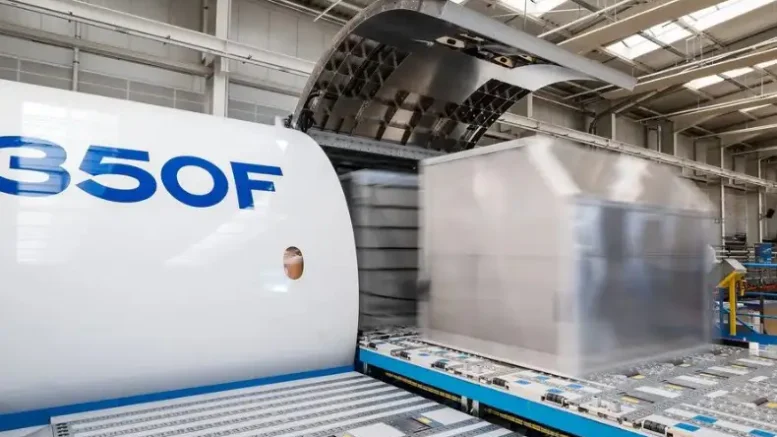
AviationNews – Airbus has commenced critical ground testing of the A350F‘s cargo systems in Bremen, Germany, marking a pivotal step in the development of the industry’s newest large-scale freighter. The trials focus on the Main-Deck Cargo Door (MDCD) and advanced Cargo Loading Systems (CLS) to ensure the aircraft can safely manage and secure up to 111 tonnes of payload.
Engineers are utilizing two primary test rigs, known as the System Integration Bench (CDAS SIB) and “Cargo Zero,” to validate the aircraft’s hardware and software before its maiden flight later this year. These physical demonstrators allow teams to simulate real-world structural loads and aircraft attitudes, transitioning digital designs into a certified, industrial reality. The testing is essential for de-risking the upcoming flight test campaign and ensuring the A350F meets rigorous EASA certification standards for airworthiness and operational reliability.
A standout technical feature of the A350F is its “more electric” architecture, which replaces traditional hydraulic systems with all-electric actuators for the cargo door. This innovation allows the massive 170-inch wide door to operate even in 40-knot winds while reducing overall aircraft weight and maintenance complexity. Additionally, the Cargo Zero rig, a 24-meter replica of the cargo hold, uses mixed reality tools to test the precision of power-drive units (PDUs) and mechanical rollers, ensuring the freighter can handle everything from delicate electronics to massive turbofan engines weighing up to 28 tonnes.
“The door system itself is always shut off during flight, so the immediate goal is ensuring the system is locked and secured,” says Jürgen Ruckes, Airbus cargo and door testing leader. “Later, the system must be shown to be compliant with airworthiness requirements for EASA certification.”
Looking ahead, the successful integration of these systems positions the A350F as a leader in the evolving global logistics market. Testing will continue through 2027, eventually offering training slots for customers to simulate specific operational scenarios. As Airbus moves toward first-flight clearance, the aviation industry anticipates a new era of efficient, high-capacity cargo transport.
The A350F represents a significant leap in freighter design, prioritizing electric actuation and automated loading efficiency. By validating these systems on the ground today, Airbus ensures that the “operational heart” of its new freighter is ready for the demands of tomorrow’s global supply chain.