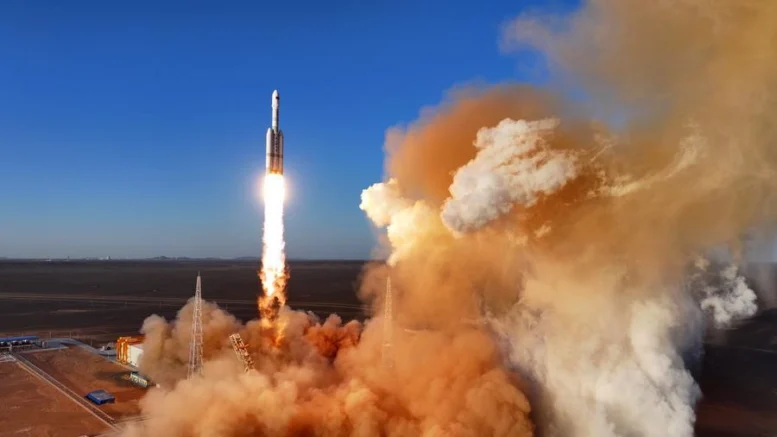
China has reached a pivotal milestone in its commercial aerospace ambitions with the full completion of a state-of-the-art “super factory” in Shaoxing, Zhejiang Province. This expansive facility is specifically designed for the Lijian-2, a large liquid-propellant carrier rocket, signaling a major transition toward the mass production of advanced launch vehicles.
The factory stands as a comprehensive industrial hub, integrating final assembly testing with the high-precision processing of core components. Production lines are now established for critical hardware, including rocket tanks, pipeline valves, interstage sections, and conduits. Once the site reaches full operational status, it will possess the industrial capacity to manufacture 12 Lijian-2 rockets annually, according to reports from China Media Group.
This development context is crucial for China’s rapidly evolving commercial space sector. Experts view the completion of the Shaoxing facility as a shift from early-stage technological validation to a standardized, industrialized production model. By treating rocket manufacturing with the scale of traditional heavy industry, the nation aims to significantly lower the barriers to entry for frequent orbital missions.
Technically, the Lijian-2 distinguishes itself as China’s first launch vehicle to utilize a Common Booster Core (CBC) configuration. This modular architecture ensures that the rocket’s first stage and its side boosters are structurally and functionally identical, streamlining the assembly process and improving operational reliability. This “building block” approach allows for faster turnaround times and more flexible mission scheduling for satellite deployments.
“The completion of this facility represents a significant leap toward the mass production phase, transforming how we approach the manufacturing of large-scale launch vehicles,” noted a representative regarding the importance of this industrial milestone.
The future outlook for the Lijian-2 program involves supporting large-scale satellite constellation deployments and low-cost cargo missions to the Tiangong Space Station. As China scales its launch frequency, this factory will serve as the backbone for a more competitive and accessible commercial space ecosystem.
The successful rollout of this “super factory” positions China to compete more aggressively in the global launch market. By moving to an assembly-line model, the sector can expect a steady increase in launch capacity over the coming decade. This shift marks a defining moment in the professionalization of private and commercial spaceflight.