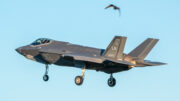
AviationNews – U.S. Navy Fighter Evades Direct Hit
A U.S. Navy F/A-18 Super Hornet narrowly escaped destruction after being targeted by an Iranian surface-to-air missile during a high-stakes strike mission. The incident, which occurred during a low-altitude strafing run, highlights the persistent dangers facing American aviators as Operation Epic Fury enters a more intensive phase of the conflict.
The encounter took place in the coastal region of Chabahar in southeastern Iran, a strategically vital area near the Pakistani border. On March 25, 2026, the fighter jet was conducting an attack on ground positions when it was engaged by a Man-Portable Air-Defense System (MANPADS). Footage circulating on social media shows the aircraft firing its 20mm M61 Vulcan cannon moments before a missile detonates directly behind the fuselage. Despite the proximity of the blast, the Super Hornet maintained flight integrity and reportedly returned to its carrier without significant damage.
Strategically, the choice to fly at low altitudes is driven by the need for precision during strafing and the tactical advantage of using the sea for rapid search-and-rescue if needed. However, this mission profile exposes aircraft to mobile, shoulder-fired systems that are notoriously difficult for traditional radar to detect. While the Islamic Revolutionary Guard Corps (IRGC) claimed the jet was downed and crashed into the Indian Ocean, U.S. Central Command (CENTCOM) has officially denied any aircraft losses, maintaining that the pilot successfully navigated the “near-miss” scenario.
“The threat from infrared-guided systems remains a primary concern during low-level operations, even when larger integrated air defenses have been degraded,” stated a defense analyst familiar with the engagement. “This incident proves that while the U.S. maintains a qualitative edge, the operational environment within Iranian territory remains contested and lethal.”
As Operation Epic Fury continues, the U.S. military is expected to evaluate its low-altitude tactics to counter the increasing use of mobile defense units. This escalation comes amid reports of indirect Russian support for Tehran and heightening tensions across the Strait of Hormuz, suggesting that the air campaign may face stiffer resistance as forces push deeper into the interior.
The narrow escape of the F/A-18 serves as a stark reminder of the thin margin between success and catastrophe in modern aerial warfare. While technology provides a shield, the human element and tactical unpredictability of ground-based insurgents continue to define the risks of the ongoing regional confrontation.
WATCH: Iranian MANPADS hit came very close to taking out a U.S. Navy F/A-18E/F Super Hornet jet over Iran yesterday. pic.twitter.com/GwSz9xlXQb
— Clash Report (@clashreport) March 26, 2026