What’s Going On?
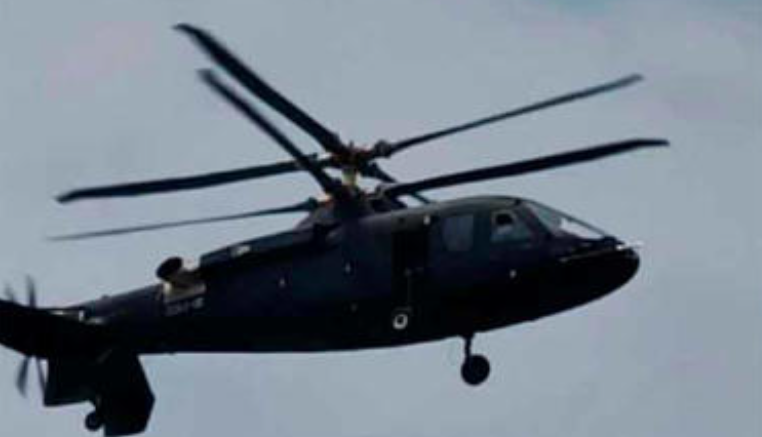
- A prototype dubbed the “Future High-Speed Helicopter” has emerged online, particularly via a video posted this past April on Chinese social media. It only recently sparked global attention.
- Military analysts quickly noticed its uncanny resemblance to the U.S. Sikorsky S-97 Raider, especially its advanced layout—coaxial rotors paired with a rear pusher propeller.
- Media outlets, like Defence-Blog, TWZ, and Interesting Engineering, have weighed in, signaling this could be a bold move by China to challenge Western rotorcraft tech.
What the Experts Are Saying
- Aviation specialist Andreas Rupprecht described the debut as a fireworks display—China isn’t holding back in flexing its aviation ambitions.
- Rick Joe adds that the demonstrator might be from Chengdu Aircraft Industry Group (CAIG), while there’s concurrently a Chinese tiltrotor project led by Harbin Aircraft Industry Group (HAIG). These may signal China is exploring both compound helicopters and tiltrotors as future PLA rotorcraft options.
A Quick Tech Flashback
- Sikorsky’s S-97 Raider was born from decades of research, beginning with the X2 demonstrator in 2010, designed to break helicopter speed barriers.
- Its coaxial rotor system avoids the need for a tail rotor. The pusher prop allows high-speed flight, rapid maneuverability, and even nose-down pirouettes—all kinds of performance tricks not seen in traditional helis.
Why This Matters—And What’s Still Unknown
- China’s apparent design borrow hints at ambitions to match U.S. rotorcraft performance. But hardware alone doesn’t make a match—the engine systems, flight controls, stealth features, and avionics are where real performance is decided, and those still lag behind Western benchmarks.
- The prototype appears to be early in testing—visible features like fixed landing gear and a chunkier tail suggest a less sophisticated stage than the Raider.
- If refined, however, such tech could significantly boost China’s rotary-winged options for high-speed transport, reconnaissance, or light assault—especially in naval or Indo-Pacific operations.