How They Got There
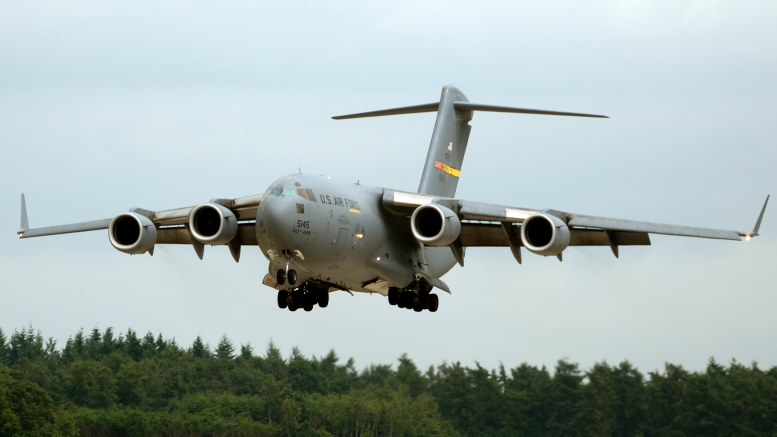
AviationNews – In mid‑July 2025, U.S. B61‑12 tactical nuclear gravity bombs were reportedly flown from Kirtland Air Force Base in New Mexico to RAF Lakenheath in Suffolk, England, via C‑17 transport aircraft. This marks the first return of American nukes to British soil since around 2008.
The deployment follows years of infrastructure upgrades at Lakenheath—including secure underground vaults and a new “surety dormitory”—planned in U.S. Defense Department budget documents as early as 2022–2023.
When They Got There
Reports indicate the weapons arrived in late July 2025, with public first mentions circulating around July 20. That timing matches recent RAF base upgrades tied to NATO’s dual capable aircraft mission.
Where in the UK
The site in question is RAF Lakenheath in Suffolk—about 100 km northeast of London. Up to 33 underground vaults (each originally built to store up to four B61 bombs) were in place since the 1990s; currently around 22 are being reactivated for modern storage of B61‑12 warheads.
These storage areas fall under U.S. military control (not UK), though they are located on British territory and operated in coordination with the RAF’s F‑35A–equipped 495th Fighter Squadron, which is now NATO-certified to deliver the B61‑12 bombs.
Why It Matters
- First U.S. nukes in the UK in nearly two decades – marking a major shift in NATO’s posture and UK’s role beyond its submarine‑based Trident deterrent.
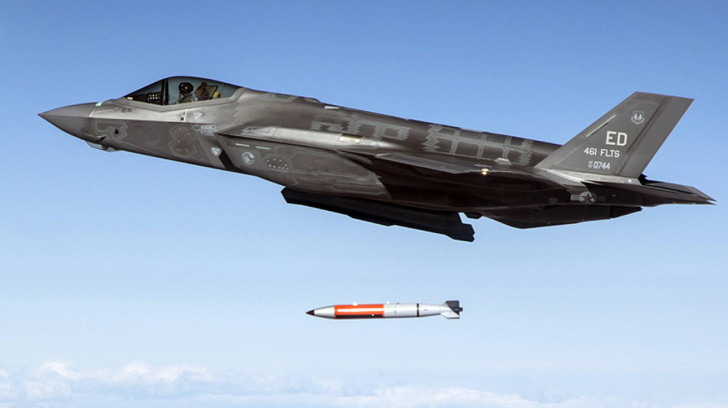
- Enhanced deterrence – B61‑12 bombs have dial‑a‑yield (0.3 to 50 kilotons) and precision guidance to be delivered by stealth-capable F‑35As, signifying a tactical-level nuclear capability redeployed into Europe.
- Geopolitical signalling – seen by analysts as a direct answer to growing Russian aggression and the Ukraine war, and intended to reassure NATO allies in northern Europe.
- Non‑proliferation concerns – critics warn that resuming so-called nuclear “sharing” may erode norms under the Non‑Proliferation Treaty by blurring the line between hosting and proliferation.
- Security implications – because the strategic placement now places Britain—and its airbases—directly on Russia’s radar, increasing both the symbolic and potential physical exposure in a nuclear escalation scenario.
What It Changes in Plain Terms
-
The UK, which until now relied solely on Trident submarines for its nuclear deterrent, will once again host U.S. air‑delivered warheads on its own soil.
-
RAF Lakenheath and the new F‑35A squadron signal an elevated role in NATO’s nuclear posture.
-
This move heightens tensions in Europe and alters the strategic balance—making the UK part of a deterrence triangle, rather than passive supporter.
- For the first time in a generation, British airfields may be central launch points in a nuclear crisis—something reserved for Cold War planning.
What is the B61-12?
The B61-12 is a thermonuclear weapon developed by the United States as a modernized replacement for earlier B61 variants (like B61-3, -4, -7, and -10). It is designed to be more precise, versatile, and compatible with modern fighter and bomber aircraft.
Key features:
- Weight: ~360 kg (800 lbs)
- Length: ~3.6 meters (12 feet)
- Yield: “Dial-a-yield” from 0.3 kilotons to 50 kilotons
- Delivery: Dropped from aircraft and guided by tail kit with GPS-assisted inertial guidance, giving it far greater accuracy than older free-fall bombs.
How is it Different from Earlier Versions?
The B61-12 combines the nuclear core of older B61s with a modern tail kit made by Boeing. That upgrade gives it precision-guided capabilities, something earlier nuclear bombs didn’t have. It means:
- More accurate strikes, reducing the need for higher yields.
- Lower collateral damage, theoretically making it more “usable” in a conflict.
- A single variant can serve multiple roles—strategic and tactical—replacing several older types.
This makes it a “smart nuke”, capable of delivering deterrence in a more flexible and calculated way.
Compatible Aircraft
The B61-12 is designed to be carried by a range of aircraft, both U.S. and NATO:
- F-35A Lightning II (the only stealth fighter certified to carry it internally)
- F-15E Strike Eagle
- F-16 Fighting Falcon
- B-2 Spirit stealth bomber
- Eventually: B-21 Raider
- NATO dual-capable aircraft like Tornado and potentially Eurofighter Typhoon (with future upgrades)
Yield Options – What Is “Dial-a-Yield”?
The B61-12 allows pilots to choose the explosive force before flight, ranging from:
- 0.3 kilotons (smaller than Hiroshima)
- Up to 50 kilotons (more than 3x Hiroshima)
This adjustable yield offers commanders flexibility to escalate or de-escalate depending on mission needs—making the bomb suitable for both battlefield use and strategic deterrence.
Why It’s Politically Controversial
- Increased usability: Critics argue its accuracy and low-yield settings make nuclear use more thinkable.
- NATO forward-deployment: The U.S. stores B61-12s in Europe (Belgium, Germany, Italy, the Netherlands—and now the UK), under the nuclear sharing program, which raises tensions with Russia.
- Modernization cost: The total life extension program for the B61-12 is expected to cost over $10 billion, which has drawn criticism for cost overruns.
Quick Summary
| Feature | Details |
|---|---|
| Type | Tactical nuclear gravity bomb |
| Guidance | Tail kit (GPS/INS) |
| Yield | 0.3–50 kilotons |
| Accuracy | Estimated <30 meters CEP |
| Aircraft | F-35A, F-15E, B-2, NATO dual-capable |
| Production Start | 2022 (Full-scale fielding began 2024) |
| Intended Lifetime | Until at least 2040–2050 |
Bottom Line
The B61-12 is a high-tech nuclear bomb for the 21st century—small, smart, and precise. While it strengthens deterrence and alliance cohesion (especially in NATO), it also reignites global debates about the risks of making nuclear weapons more usable and deployable in tactical scenarios.