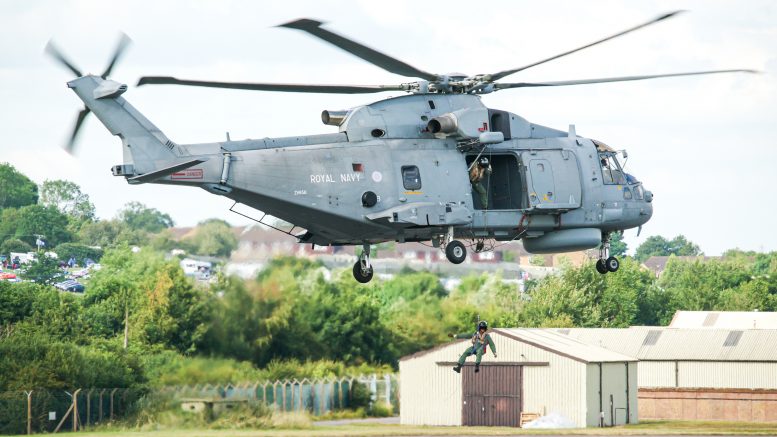
Summer Special 2025
Introduction
Aviation News July 5, 2025 – The Fleet Air Arm (FAA) is the aviation branch of the United Kingdom’s Royal Navy, responsible for the operation of naval aircraft from ships and shore bases. Known for its daring feats and high level of professionalism, the FAA plays a crucial role in projecting naval power and supporting British military operations worldwide.
History
The origins of naval aviation in the UK trace back to the Royal Naval Air Service (RNAS), formed in 1914 during World War I. In 1918, the RNAS was merged with the Royal Flying Corps to form the Royal Air Force. However, the need for dedicated naval aviation soon became evident, and in 1937, operational control of naval aircraft was returned to the Admiralty under the name Fleet Air Arm.
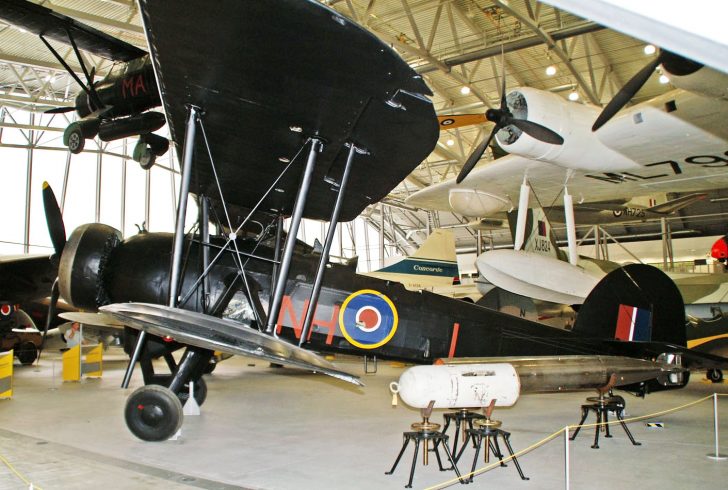
Fairey Swordfish II NF370 NH-L Fleet Air Arm
The Fairey Swordfish is most often regarded as the first iconic aircraft of the Fleet Air Arm, it was operated initially under RAF control before the FAA formally took command. Therefore, the Swordfish, along with the Blackburn Skua and Gloster Sea Gladiator, were among the first aircraft to fly under Fleet Air Arm command when it was re-established under the Admiralty in 1939.
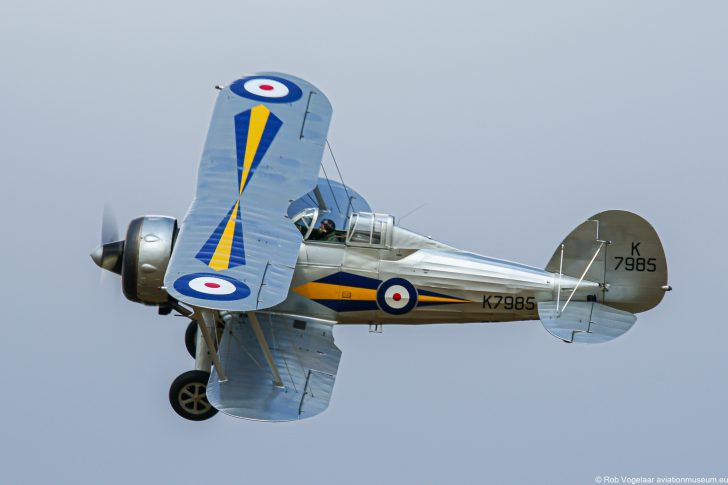
During World War II, the FAA played a pivotal role in major naval engagements such as the Battle of Taranto (1940) — the first all-aircraft naval attack in history — and the sinking of the Bismarck (1941). Throughout the war, the FAA operated a wide range of aircraft, including the Fairey Swordfish, Sea Hurricane, and Supermarine Seafire.
Post-war, the Fleet Air Arm continued to evolve with the Cold War, transitioning from piston-engine planes to jet aircraft and helicopters. It saw action in conflicts such as the Korean War, Falklands War (1982), Gulf War, and recent operations in the Middle East and Africa.

Over the decades, the Fleet Air Arm has operated a variety of rotary aircraft, many of which played crucial roles in anti-submarine warfare (ASW), search and rescue (SAR), troop transport, and general utility roles.
1. Westland Dragonfly (1949–1963)
- Based on the Sikorsky S-51.
- One of the first helicopters in FAA service.
- Used primarily for SAR and communications.

Westland Dragonfly HR.5 WH991 Royal Navy
2. Westland Whirlwind (1953–1969)
- Based on the Sikorsky S-55.
- Served in ASW and SAR roles.
- Equipped with sonar for submarine detection in some variants.

Westland Whirlwind HAR.1 XA870/911 FAA Royal Navy
3. Westland Wessex (1958–1988)
- Derived from the Sikorsky H-34.
- Roles: ASW, utility transport, SAR.
- One of the main FAA workhorses during the Cold War.
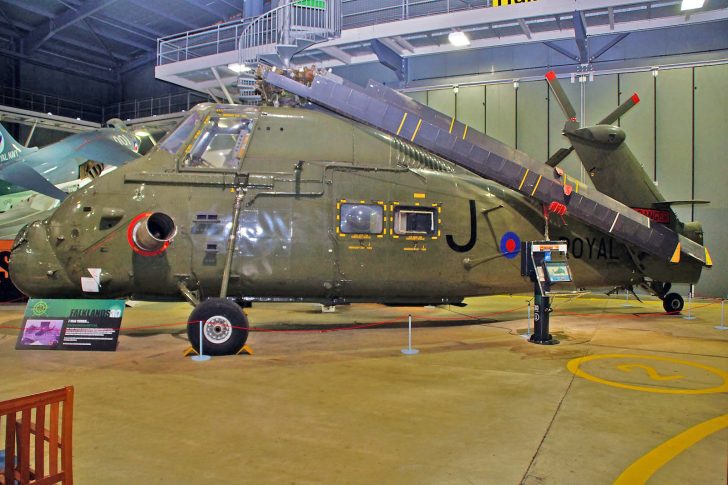
Westland Wessex HU.5 XT765/J Fleet Air Arm Royal Navy
4. Westland Sea King (1969–2016)
- Based on the Sikorsky SH-3 Sea King.
- Main ASW platform of the FAA for decades.
- Multiple variants: ASW, AEW (Airborne Early Warning), SAR, and Commando troop transport.
- Widely deployed in the Falklands War and other conflicts.
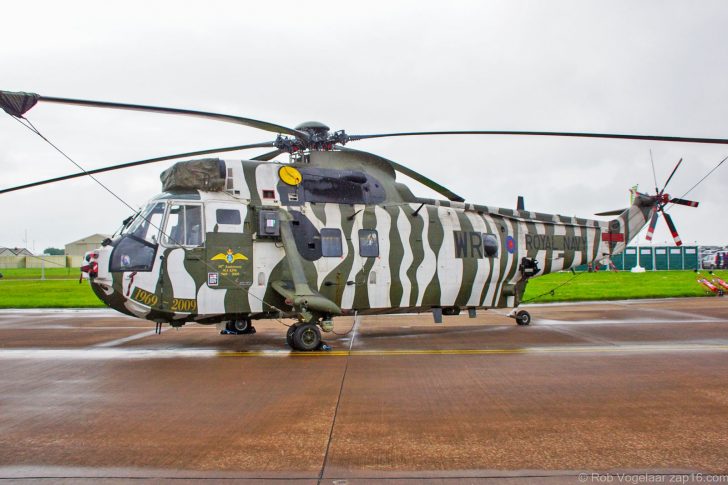
Westland Sea King HC.4 ZE425/WR 846NAS FAA Royal Navy
5. Westland Lynx (1976–2017)
- Designed specifically for naval operations.
- Fast and highly maneuverable.
- Armed with torpedoes and missiles; used for ASW and anti-surface warfare.
- Served on frigates and destroyers.

Westland Lynx HAS.3S(ICE) XZ246/434 FAA Royal Navy
6. Westland Wasp (1963–1988)
- Small helicopter used for ASW from smaller ships.
- Could carry torpedoes or depth charges.
- Often deployed on destroyers and frigates.

Westland Wasp HAS.1 XS567/434-E Fleet Air Arm
7. Westland Scout (1960–1980s)
-
Army collaboration, but also used by FAA for training and light utility roles.
-
Closely related to the Wasp.
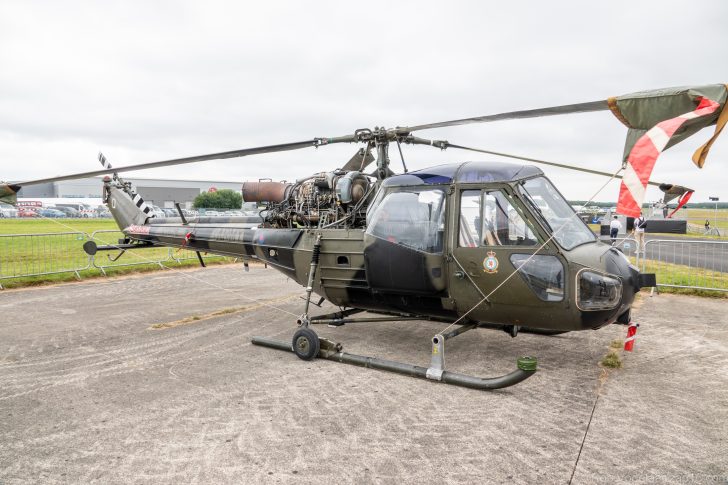
Westland Scout AH.1 (G-CIBW) XT626/Q AAC (Historic Army Aircraft Flight)
Aircraft
Today’s Fleet Air Arm operates a modern, capable fleet of fixed-wing and rotary-wing aircraft:
Fixed-Wing
- F-35B Lightning II: Operated jointly with the RAF, this stealth multirole fighter flies from the Queen Elizabeth-class aircraft carriers.
- Avenger T1: Used for observer training.
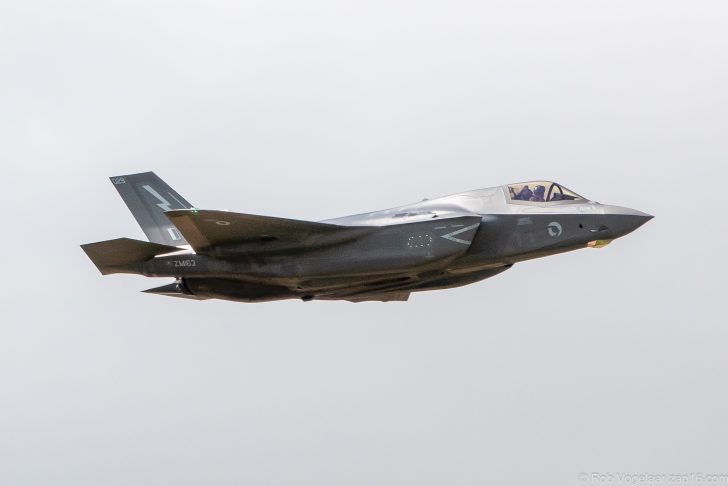
Lockheed Martin F-35B Lightning II ZM163/029 207sq RAF
Rotary-Wing
- Merlin HM2: Anti-submarine and maritime patrol helicopter.
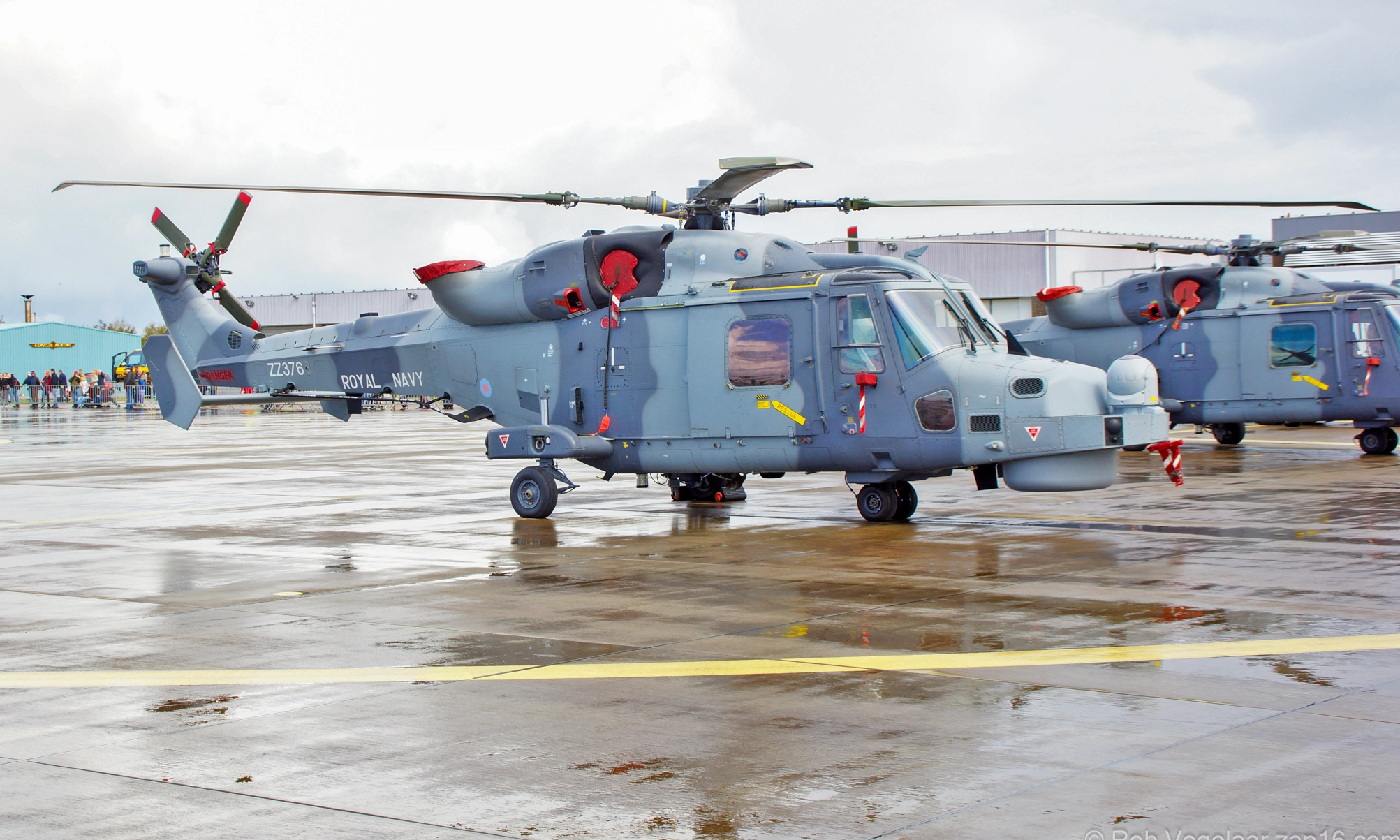
- Wildcat HMA2: A versatile helicopter used for reconnaissance, anti-surface warfare, and transport.
- Merlin HC4: Used for amphibious operations and troop transport.

AgustaWestland Merlin HC.4A ZK001/AF 846NAS FAA Royal Navy

Training
The Fleet Air Arm places a strong emphasis on rigorous and specialized training:
- Initial Officer Training: Conducted at Britannia Royal Naval College.
- Aircrew Training: Includes basic flying at RAF Barkston Heath, advanced flying at RAF Valley, and type-specific training.
- Observer and Sensor Operators: Receive dedicated instruction for operating radar, sonar, and electronic warfare systems.
Aircrew are trained to operate in complex maritime environments, often conducting joint exercises with NATO and allied forces.
Roles and Responsibilities
The FAA undertakes a wide array of missions, including:
- Maritime Strike: Engaging surface and subsurface targets.
- Fleet Protection: Defending ships from air and missile threats.
- Reconnaissance and Intelligence Gathering: Through surveillance and electronic warfare.
- Amphibious Support: Transporting Royal Marines and equipment.
- Humanitarian Aid and Disaster Relief: Providing critical support in crisis zones.
Air Stations
Key Royal Navy Air Stations include:
- RNAS Yeovilton (HMS Heron): Home to the Wildcat force and Commando Helicopter Force.
- RNAS Culdrose (HMS Seahawk): Hosts the Merlin fleet and observer training.
- HMS Queen Elizabeth & HMS Prince of Wales: The UK’s largest warships and mobile airbases for F-35 operations.
The Future of the Fleet Air Arm
Looking ahead, the Fleet Air Arm is set to grow in capability and importance. Key developments include:
- Expansion of the F-35B fleet: Increasing the carrier strike capability.
- Advancements in UAVs: Integrating drones for surveillance, resupply, and strike missions.
- Next-Generation Helicopters: Exploring replacements for the Wildcat and Merlin.
- Enhanced Training Programs: Leveraging VR and AI for realistic, adaptable training.
The Royal Navy is committed to ensuring the FAA remains at the forefront of naval aviation, fully integrated into the UK’s joint force and capable of meeting emerging global challenges.

Lockheed Martin F-35B Lightning II ZM144 207sq RAF
Conclusion
The Fleet Air Arm remains a cornerstone of the Royal Navy’s combat power. From its historic battles to its cutting-edge aircraft and highly trained personnel, the FAA is ready to meet the challenges of modern warfare. As threats evolve, so too will this elite force — steadfast in its mission to protect the nation’s interests at sea and in the air.


