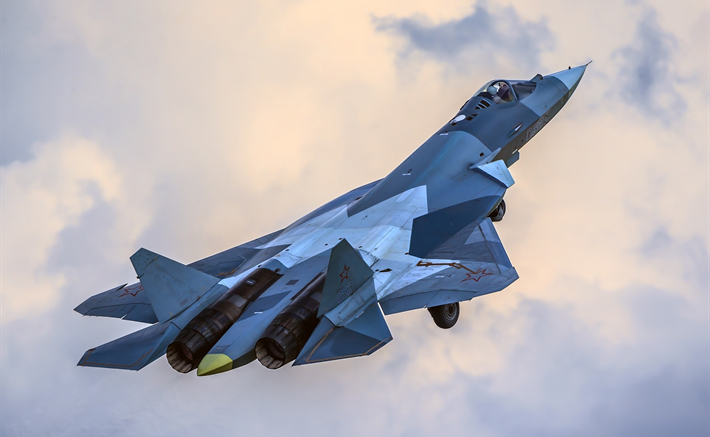
Aviation News – Ukraine’s military intelligence agency (HUR) confirmed that a Russian Sukhoi Su-57 fifth-generation fighter jet sustained engine fire damage at the Akhtubinsk airfield in Russia’s Astrakhan Oblast on October 29. This incident highlights growing operational vulnerabilities within Russia’s advanced military aviation fleet due to resource constraints.
According to a November 2 social media statement released by HUR, the unexpected engine fire may stem from deteriorating jet fuel quality linked directly to successful Ukrainian long-range drone strikes targeting Russian oil refineries. Back in August, the intelligence agency reported that Russia was growing increasingly dependent on aviation fuel imports as domestic production facilities faced severe disruptions. These compounding supply chain bottlenecks threaten the operational readiness of high-end military assets across the region.
The Su-57 stands as Russia’s most advanced and expensive operational fighter jet, representing peak domestic aerospace engineering. Financial estimates for the aircraft vary widely, ranging from $35 million according to a 2019 report by Russian media outlet Kommersant, up to approximately $150 million for the sophisticated export variant as cited by HUR. Losing or damaging such a high-value asset deals a significant psychological and strategic blow to the Russian air force.
Operating a fifth-generation stealth aircraft requires immaculate fuel purity and precise thermal management to prevent catastrophic turbine failures. Substandard fuel quality directly compromises engine components, reducing thrust efficiency and dramatically increasing the risk of onboard fires during ground operations or flight. This technical vulnerability underscores how remote infrastructure attacks can cascade into direct mechanical failures on frontline combat hardware.
“The deterioration of domestic fuel standards and reliance on foreign imports create critical vulnerabilities for high-performance military aircraft,” stated an independent defense analyst regarding the recent airfield incident.
Looking ahead, defense experts expect military planners to monitor fuel supply chains closely as secondary impacts from refinery strikes ripple across Russia’s aerospace sector. Aviation observers and security analysts are encouraged to track ongoing intelligence updates regarding how logistical strains affect modern fighter fleets.