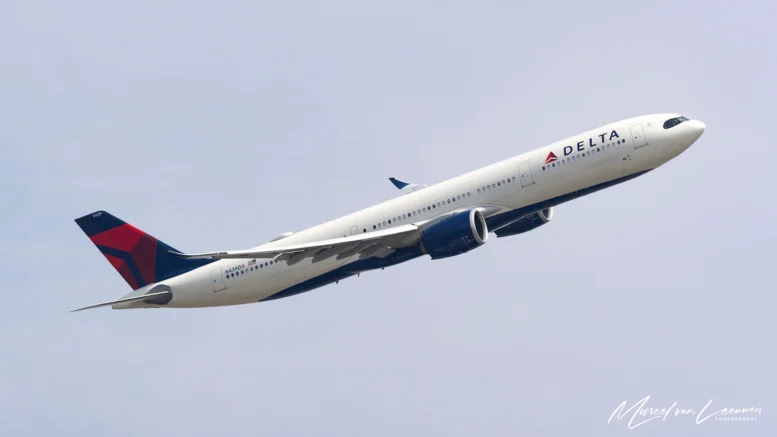
AviationNews – Israeli security services ordered the emergency evacuation of a Delta Air Lines Airbus A330-900neo at Ben Gurion Airport on Tuesday following an anonymous bomb threat claiming explosives were hidden onboard. Specialized bomb disposal units cleared the wide-body aircraft after exhaustive inspections revealed no hazardous materials, allowing the airport to resume normal flight operations.
The security alert unfolded on the morning of October 13, 2026, when Delta flight DL234 from New York’s John F. Kennedy International Airport (JFK) touched down at Tel Aviv. An anonymous warning received by authorities alleged that an explosive device had been placed inside the aircraft’s cargo hold. Air traffic controllers immediately guided the Airbus A330-941 (registration N423DX) away from Terminal 3 to an isolated taxiway pad, where security forces, fire crews, and explosive detection teams rapidly surrounded the jet and initiated a precautionary deplaning process.
Airport perimeter protocols for bomb scares mandate strict standoff distances to shield main terminal facilities and adjacent taxiways from potential blast impacts. Passengers and flight crew were disembarked directly onto mobile airstairs before being transported by secured buses to a dedicated processing lounge inside the terminal. Explosive ordnance disposal technicians and K9 units subsequently swept the passenger cabin, flight deck, avionics bays, and underfloor cargo compartments, while ground handlers re-screened all checked baggage through high-resolution explosive detection scanners.
Delta Air Lines confirmed the incident in an official statement, emphasizing the priority placed on flight safety and procedural compliance. “Out of an abundance of caution, Delta Flight 234 JFK-TLV was deplaned upon landing and inspected by local authorities to evaluate a potential security issue,” the airline stated. “No credible threat was found, and customers and crew were transported safely to the terminal. We are grateful for the Delta team’s professionalism, and we apologize to our customers for any inconvenience.”
The swift resolution of the scare highlights the heightened vigilance across Middle Eastern airspace, where civil aviation security agencies operate under elevated readiness standards. International carriers and airport authorities continue to refine collaborative threat-assessment frameworks to deter malicious hoaxes and keep critical transoceanic flight corridors operating smoothly.
With the aircraft declared safe and no suspicious items discovered, the Israel Airports Authority returned Ben Gurion Airport to regular scheduling within two hours of the alert. The incident concluded without injury or damage, and investigators are working to trace the origin of the false threat.