Royal Air Force to Develop Sovereign Air-to-Air Boom Refueling Capability
Aviation News – The Royal Air Force will introduce an advanced air-to-air boom refueling system to complement its current flexible hose setup, strengthening sovereign operational independence and deep inter-alliance readiness.
In a formal response to a parliamentary question from opposition MP Ben Obese-Jecty, Minister of State for Defence Readiness and Industry Luke Pollard confirmed that governmental approval has been granted to expand the UK’s aerial refueling capabilities. The decision addresses long-standing limitations in the current tanker fleet, establishing a dedicated framework to service advanced aircraft across the British military and allied defense networks.
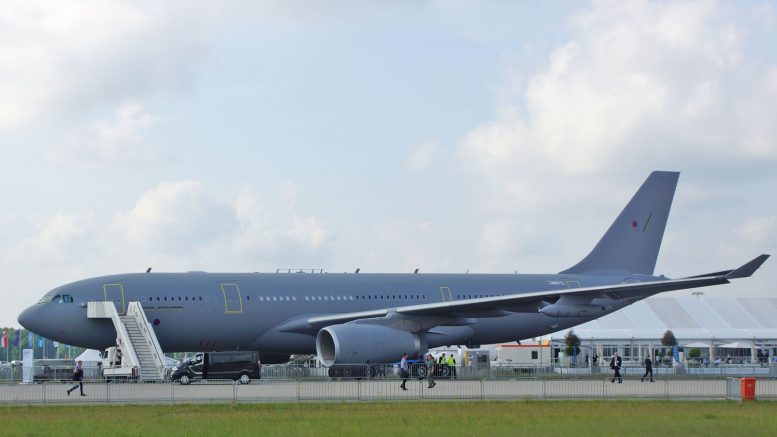
Historically, the Royal Air Force (RAF) has relied strictly on a probe-and-drogue refueling architecture for its Voyager A330MRTT fleet. Under this configuration, the tanker deploys a flexible hose terminating in a basket, into which receiving aircraft maneuver a extended probe. However, this setup left the UK unable to natively support several of its own critical airframes—including the RC-135W Rivet Joint, C-17A Globemaster III, P-8A Poseidon, and E-7A Wedgetail—which require a rigid flying boom.
The addition of an advanced flying boom system utilizes a rigid, operator-guided telescopic tube mounted to the rear of the tanker. This mechanism allows fuel to transfer at substantially higher volumetric rates compared to hose-and-drogue systems, significantly reducing target connection time and optimizing mission endurance for heavy transports, surveillance planes, and future stealth fighters.
“The Royal Air Force currently operates a probe and drogue air-to-air refuelling system and will complement this with the development of a boom system,” stated Luke Pollard, Minister of State for Defence Readiness and Industry. “This will ensure we have a sovereign air-to-air refuelling capability for the future Royal Air Force fleet that enhances interoperability with NATO Allies and partners.”
Integrating boom refueling resolves critical operational gaps while laying essential groundwork for incoming platforms, such as prospective F-35A variants and the sixth-generation Global Combat Air Programme (GCAP) fighter. Furthermore, acquiring boom capability provides complete joint flexibility across coalition deployments, ensuring full integration alongside NATO forces during complex international missions.
This strategic decision marks a vital step in modernizing British defense infrastructure and securing long-term air superiority. By removing reliance on external partner tankers for heavy-asset refueling, the Royal Air Force guarantees complete tactical independence. Moving forward, the development will elevate operational agility and fortify coalition capabilities well into the future.