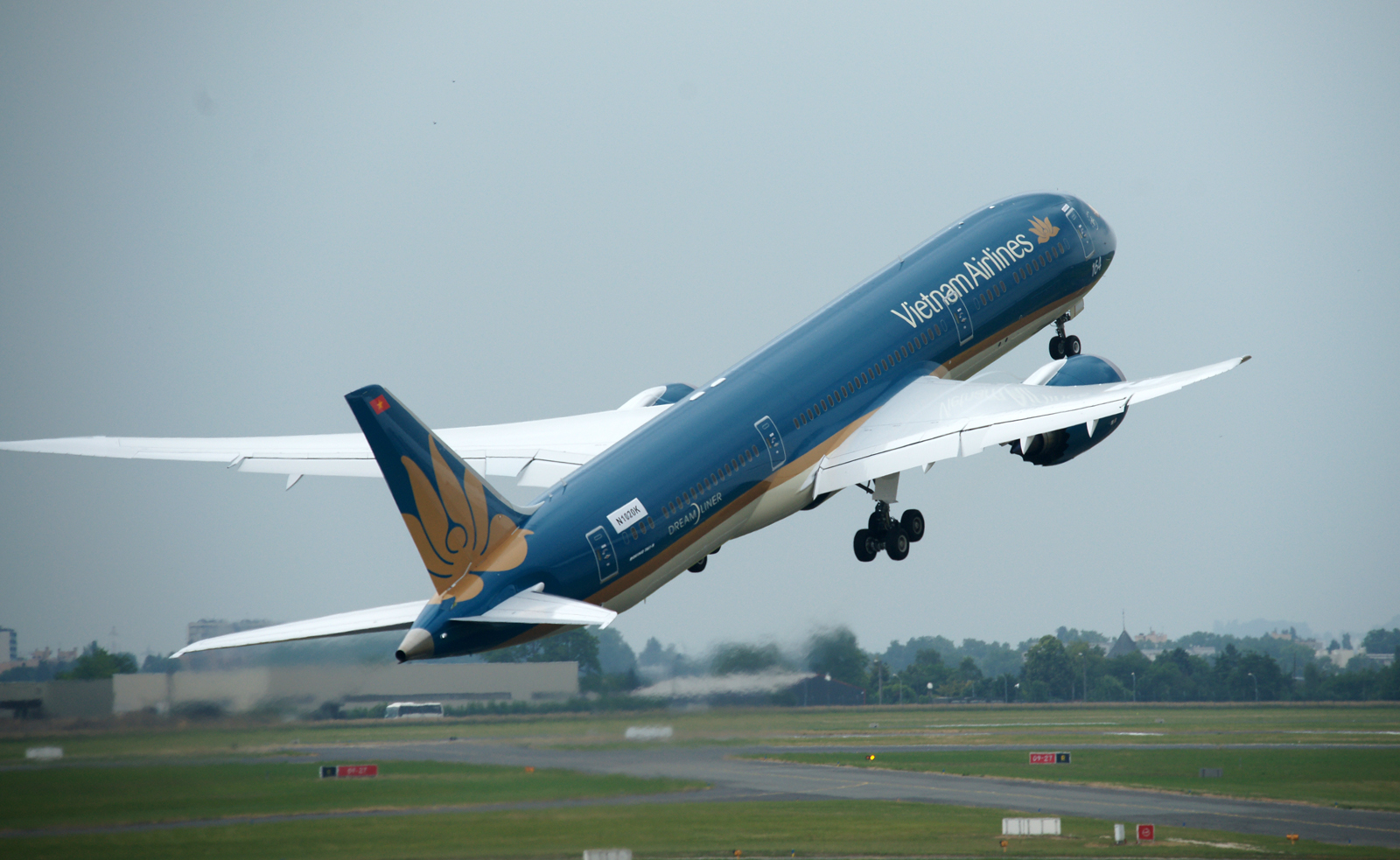
Aviation News – A Vietnam Airlines Boeing 787-9 operating flight VN34 was involved in a serious incident at Munich Airport (MUC) after experiencing an late rotation and subsequent tail strike during departure. The widebody jet returned to the airfield for an emergency landing, shredding multiple main gear tires and stranding the aircraft on a taxiway.
The long-haul flight bound for Hanoi initiated its takeoff roll on Munich Airport’s runway 26L, which offers a Take-Off Run Available (TORA) of 4,000 meters. According to flight radar data and video footage recorded by airport spotters, the aircraft, registered VN-A867, utilized the full length of the paved surface before rotating extremely late. The late pitch-up forced the rear fuselage to strike the runway surface while kicking up a massive plume of dust beyond the threshold.
Following the compromised departure, the crew ceased their climb, entered a holding pattern to dump fuel, and climbed to FL100 while evaluating onboard gear warnings. The flight crew then returned to Munich and executed two low-altitude passes over runway 26R, allowing ground controllers and emergency teams to visually assess the structural condition of the landing gear.
At 13:57 UTC, the crew brought the long-haul jet down on runway 26R. The firm touchdown shredded multiple tires on the left main landing gear assembly, causing the aircraft to vacate onto taxiway A6, where it became completely immobilized. Severe ground friction and landing stress left the main gear disabled, prompting airport fire services to secure the scene immediately.
”The flight crew acted within established emergency operating procedures upon detecting gear indications, returning safely to Munich to ensure passenger welfare,” stated a representative monitoring the investigation. “A comprehensive inspection of the airframe structure and landing gear assemblies is currently underway in coordination with German aviation safety authorities.”
Post-incident inspections confirm extensive damage to the underside of the rear fuselage, along with structural compromise to both the horizontal and vertical stabilizers. Investigators from the German Federal Bureau of Aircraft Accident Investigation (BFU) will examine weight and balance calculations, performance settings, and flight data recorders to pinpoint the root cause of the delayed rotation.