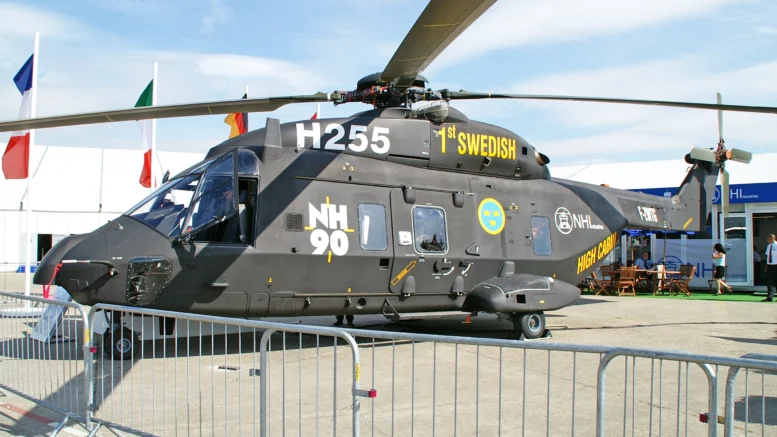
Aviation News – Sweden will begin retiring nine of its land-based NH90 Tactical Transport Helicopters starting in 2027, transitioning its battlefield lift operational focus toward the combat-proven American UH-60M Black Hawk. The formal fleet restructuring addresses long-standing availability and maintenance bottlenecks to ensure reliable rotary-wing capabilities for the Swedish Armed Forces.
According to defensive planning reports emerging on August 24, 2026, the Swedish Armed Forces will officially incorporate the phase-out of the HKP 14E—the national designation for the tactical transport version—into the 2027 defense strategy. Stockholm originally procured a total fleet of 18 bespoke high-cabin NH90 aircraft split between troop transport and anti-submarine warfare configurations. However, less than a decade after receiving its full operational delivery, persistent maintenance complexities and low flight-hour readiness forced defense officials to re-evaluate the platform’s long-term viability.
To bridge the operational gap left by the early retirement of the HKP 14E, defense planners are reallocating capital to expand their existing inventory of UH-60M Black Hawk (HKP 16) helicopters. Sweden initially procured 15 UH-60M airframes to cover previous delay gaps and recently committed to acquiring additional units to establish a homogenized transport backbone. Meanwhile, the maritime-variant NH90 NFH (HKP 14F) fleet will temporarily remain active to preserve essential anti-submarine warfare and naval surveillance capabilities.
The NH90 platform, developed by the NHIndustries consortium, utilizes advanced composite construction and electronic fly-by-wire flight control systems to execute heavy tactical airlifts and medical evacuations. Despite its high-tech specification, extreme maintenance hour requirements per flight hour and costly spare-parts pipelines drastically reduced operational readiness. Replacing the complex tactical transports with the mechanically straightforward Sikorsky design provides the air force with higher mission-capable rates, lower operating costs, and streamlined logistics through a mature global supply chain.
“The retirement of the HKP 14E represents a necessary strategic shift to prioritize immediate operational availability over complex maintainability,” noted a defense aviation analyst on the fleet transition. “Transitioning tactical transport duties entirely to the UH-60M infrastructure ensures that our frontline forces maintain predictable airlift readiness across northern Europe.”
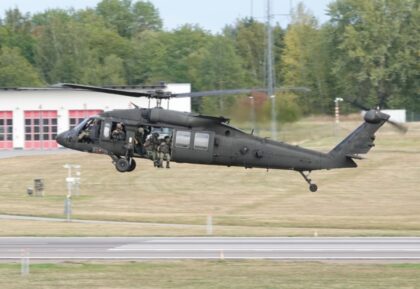
Sikorsky UH-60M Black Hawk helicopter Swedish Air Force | Rob Vogelaar
Transitioning battlefield lift responsibilities entirely to the Sikorsky platform signals an operational pivot as Sweden aligns its aerial inventory with NATO standard readiness targets. The move places Sweden alongside nations like Australia and Norway, which both previously terminated or scaled back NH90 programs in favor of simplified American rotary assets. Tactical transport units will systematically phase out the European aircraft through the late 2020s while integration of the new UH-60M aircraft accelerates.
The Swedish decision underscores a broader European trend of prioritizing fleet readiness and simplified logistics over complex rotary platforms. Retaining the maritime NH90 NFH ensures specialized anti-submarine warfare operations remain intact while transport units transition smoothly. Overall, expanding the UH-60M Black Hawk footprint provides the military with a reliable, combat-proven backbone for Baltic security commitments.