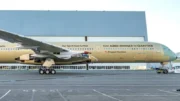
AviationNews – Airbus has officially reaffirmed its operational target to deliver approximately 870 commercial aircraft in 2026. The European planemaker is accelerating production across its A321neo and A350 assembly lines to address massive airline backlogs worldwide.
The aerospace manufacturer maintained its full-year guidance following a robust second-quarter recovery that offset a sluggish start to the year caused by supply chain bottlenecks and engine availability constraints. Airbus handed over 351 commercial jets to 77 airline customers during the first six months of 2026, marking a 15% increase compared to the 306 deliveries recorded in the same period of 2025. With net aircraft orders reaching 821 units in the first half of the year, demand continues to outpace production, pushing the company’s total order backlog to over 9,200 aircraft.
To meet its annual benchmark, Airbus must deliver roughly 519 additional aircraft in the second half of 2026, requiring an average monthly output of nearly 87 jets. Operational adjustments are focusing heavily on the high-demand A320neo family, where the company is ramping up toward a monthly production rate of 75 aircraft, alongside expanding A350 widebody assembly rates. The resolution of administrative delivery delays and improved flow of Pratt & Whitney engines have cleared major operational hurdles, allowing final assembly lines in Toulouse and Hamburg to sustain higher delivery cadences.
“Our 2026 delivery guidance of around 870 commercial aircraft remains fully on track as production momentum accelerates,” stated Guillaume Faury, Airbus Chief Executive Officer. “We maintain a high degree of confidence in meeting our targets as we work closely with suppliers to support our ramp-up trajectories across all aircraft programs.”
The sustained ramp-up reflects Airbus‘s long-term strategy to expand global manufacturing capacity toward delivering more than 1,100 commercial aircraft annually by 2029. Airlines seeking fleet modernization and reduced fuel burn rely heavily on timely handovers, which will dictate global airline capacity growth over the coming years.
The reaffirmation of Airbus‘s 870-aircraft delivery target underscores the manufacturer’s operational resilience amid persistent global supply chain challenges. Strong market demand and accelerating assembly line output position the planemaker for solid second-half performance. As production rates stabilize, commercial aviation operators can expect improved delivery schedules for their core fleet expansions.