AviationNews – South Korea scrambled its F-35A fighter jets after a fleet of more than ten Chinese and Russian military aircraft entered its air defense identification zone (KADIZ) without prior warning. This unannounced entry highlights escalating geopolitical tensions in the Asia-Pacific region, prompting immediate tactical responses from Seoul.
The incident occurred on June 27, 2026, when a combined formation of bombers, fighters, and support aircraft from China and Russia flew into the KADIZ over the East Sea and southern waters. South Korea‘s Joint Chiefs of Staff (JCS) confirmed that the foreign warplanes entered and subsequently left the zone without violating sovereign South Korean territorial airspace. Defense analysts widely regard this coordinated maneuver as part of the 11th joint strategic air patrol conducted by Beijing and Moscow, a recurring military exercise that frequently triggers security alarms in both Seoul and neighboring Tokyo.
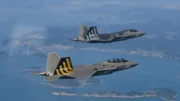
An air defense identification zone acts as a strategic buffer where a nation requires foreign aircraft to identify themselves to prevent accidental military clashes. By deploying its advanced F-35A stealth fighters, the Republic of Korea Air Force successfully intercepted and monitored the approaching Chinese and Russian military aircraft—which included heavy strategic bombers—throughout their flight path. This rapid scramble capability demonstrates the operational readiness of South Korea to track and counter complex, multi-national airspace incursions.
“Our military identified the Chinese and Russian aircraft before they entered the KADIZ and deployed Air Force fighter jets to take tactical measures in preparation for possible contingencies,” stated the South Korean Joint Chiefs of Staff regarding the defensive maneuver.
Moving forward, the increasing frequency of these joint Sino-Russian air patrols suggests a deliberate strategy to challenge existing security frameworks and test the response times of U.S. allies in the Pacific. Consequently, South Korea will likely enhance its radar surveillance systems and strengthen defense cooperation to counter future unannounced incursions. This growing friction underscores the critical need for established communication channels to prevent mid-air miscalculations from sparking a larger conflict.
In summary, the coordinated intrusion by Chinese and Russian military aircraft into the KADIZ emphasizes the fragile security environment in East Asia. By rapidly deploying F-35A fighters, South Korea showcased its strict military vigilance while effectively avoiding a direct confrontation. As joint military exercises between Beijing and Moscow become more frequent, regional defense forces will undoubtedly remain on high alert.